

Executive Summary
- Uneven gait after hip replacement surgery is usually considered normal during early recovery when muscles, joints, and movement patterns are still adapting to the new hip.
- Weakness, swelling, stiffness, and protective movement patterns after surgery can temporarily affect balance, stride length, and weight distribution, all important aspects of gait.
- Uneven leg length after hip surgery is often just a temporary sensation caused by changes in muscle tension, pelvic positioning, or hip mechanics rather than an actual difference in bone length.
- An uneven gait often improves with physical therapy, strengthening, and consistent practice, but worsening pain, instability, or sudden changes in mobility should be evaluated.
Patients’ Experiences with Walking after Hip Replacement Surgery
On average, people in the United States take about 4,774 steps a day, meaning walking is an integral part of most people’s lives. Understandably so, most patients are itching to get back on their feet and return to this basic form of transportation after a hip replacement surgery.
However, many patient stories express that walking doesn’t feel completely natural right away. Usually, this is not a reason for immediate alarm—uneven gait after hip replacement surgery is common, particularly during the early stages of recovery, as the body adjusts to changes in the hip joint and surrounding tissues.
If you just had your hip replaced or you have an upcoming surgery, it is important to remember that recovery involves more than simply allowing the new joint to heal. The muscles, balance systems, and movement patterns responsible for walking must also be retrained through physical therapy and gradual activity progression. As strength and confidence return, walking patterns may become smoother and more symmetrical.
This guide can help you tailor your expectations regarding walking with your new prosthesis and ease your concerns about things like uneven leg length after hip surgery.
Learning About Walking Mechanics
One of the most important things to know before hip replacement surgery is how it can impact your ability to move around, usually for the better. However, before you can learn about that, you have to understand how walking works in general.
Walking may look simple, but it requires several parts of the body to work together, most notably:
- Hips
- Legs
- Pelvis
- Core
- Balance systems
These all contribute to a stable and efficient gait. For example, weakness in the muscles responsible for stabilizing the pelvis can cause a person to lean toward one side while walking. The hip joint plays an especially important role in controlling how the body moves from one step to the next.
Why Walking May Feel Different After Surgery
Before surgery, many patients develop ways of walking that compensate for chronic pain, stiffness, weakness, or limited mobility. Those patterns can become habitual over time. After surgery, the source of the original pain may have been addressed, but the compensatory movement patterns may linger for a little while longer.
Even if you didn’t develop asymmetrical movement patterns before the surgery, they can rear their head later on due to the muscle atrophy that tends to happen during the early, more sedentary stages of recovery. It is also possible for temporary swelling or stiffness to make patients hesitant to put their full weight on the surgical side, encouraging them to naturally shorten their stride or shift their weight while walking to avoid discomfort.
Typical Walking Progression After Hip Replacement Surgery
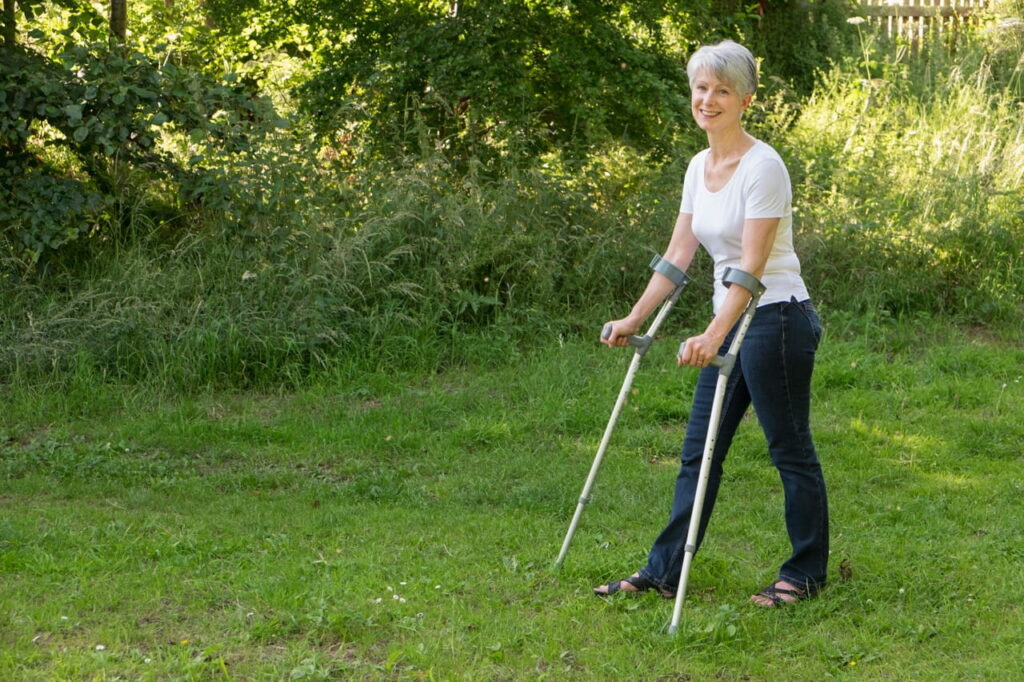
An altered walking pattern is often a normal part of recovery, especially if it is experienced during the first several weeks after surgery. Although minimally invasive hip replacement techniques allow many patients to walk just hours after their procedure, even people who have gotten a MAKOplasty are still strongly advised to use assistive devices like walkers or a cane while their strength and balance improve. As rehabilitation progresses, they typically transition toward more independent and natural movement.
When an Uneven Gait Needs Attention
Patients should focus on whether their mobility is improving over time to determine if they need medical intervention—if you walk unevenly but are gradually becoming stronger, more comfortable, and more stable, you may simply be progressing through the recovery process as normal. Nevertheless, a sudden change or worsening symptoms warrants communication with your surgical team.
Patients should contact their healthcare provider if they experience things like:
- Increased or persistent pain while walking
- A sudden decline in mobility or a gait that becomes progressively worse
- Significant difficulty bearing weight or maintaining stability
- New symptoms that were not present earlier in recovery
These symptoms do not automatically mean something is wrong with the implant or indicate a need for hip revision surgery; they just mean additional evaluation is appropriate. A qualified care team can offer personalized medical guidance to help you address pain and other complications so that you can keep your recovery on track.
Restoring Strength and Walking Mechanics
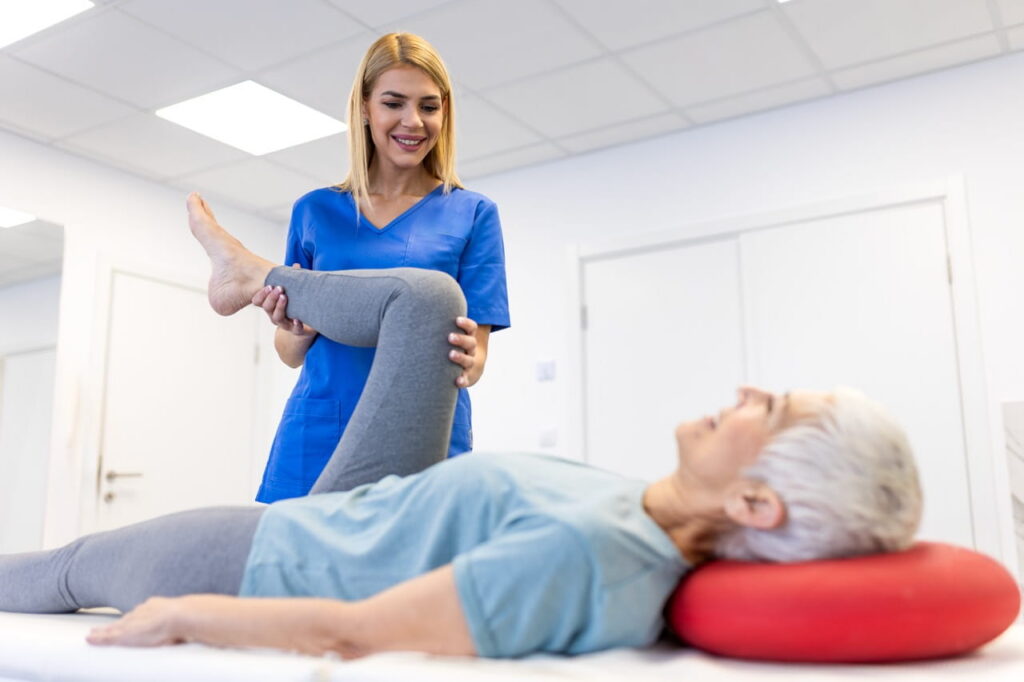
Regaining a more natural gait requires more than simply waiting for the hip to heal. The muscles that support the joint need to regain strength and coordination, which is one reason physical therapy after hip replacement surgery plays such an important role in recovery.
Physical therapists can identify movement patterns that may be contributing to an uneven gait and help patients practice more efficient ways of standing, walking, turning, and changing direction.
What Does Hip Replacement Physical Therapy Focus On?
After someone gets a hip replacement, their rehabilitation plan usually features strengthening and joint mobility exercises focused on these six muscle groups:
- Gluteal muscles
- Hip abductors
- Hip extensors
- Core muscles
- Quadriceps
- Hamstrings
These muscle groups are targeted because they need to work together to stabilize the pelvis and control the leg during walking. As they become stronger, patients can generally place weight on the surgical side with greater confidence and control.
Another way physical therapy enhances long-term joint health is by incorporating balance exercises, walking drills, range-of-motion work, and functional movements that replicate everyday activities.
Take a Slow and Steady Approach to Rehab
Consistency is important when it comes to post-surgery physical therapy. You shouldn’t expect to notice dramatic changes after a single therapy session. To get the best results possible, you should attend all the guided classes and regularly practice the therapist-recommended hip stretches and exercises at home.
Your physical therapist should give you instructions on how to progress your activity levels gradually. Trying to walk long distances or run after hip replacement surgery before your body is ready and your healthcare provider approves can reinforce compensatory movement patterns rather than improving them.
Understanding Uneven Leg Length After Hip Surgery
Another concern that can accompany an uneven gait is the sensation that one leg feels longer or shorter than the other. An uneven leg length after hip surgery can be unsettling, particularly when the patient notices a difference while standing or walking.
However, the sensation of uneven leg length does not always mean there is a true difference between the legs—perception and structural leg length are not always the same thing.
Some factors that can temporarily change how the legs feel after surgery are:
- Muscle weakness
- Swelling
- Pelvic positioning
- Changes in hip mechanics
Before surgery, chronic hip problems may also have caused changes in posture or walking mechanics that the body had adapted to over time. After the joint is replaced and alignment changes, the nervous system may need time to adjust to the new position.
Will the Feeling of Leg Unevenness Go Away?
Most likely, yes. Many patients report a sensation of their legs evening out after hip replacement surgery as their muscles strengthen and the pelvis and surrounding tissues adapt. Improved walking mechanics can also change how the feet contact the ground, which may make the legs feel more balanced.
Patients who continue to notice a significant difference should discuss it with a trusted medical professional. An evaluation with a knowledgeable joint specialist like Dr. Shane Martin can help determine whether the sensation is related to temporary muscular and positional changes or whether there is an actual leg length discrepancy that needs to be addressed.
Everyone Recovers Differently
It is important to remember that everyone is bound to have a slightly different hip replacement recovery timeline. Some things that influence how quickly someone regains normal movement are:
- Their anatomy
- Age and overall health
- Pre-surgical activity levels
- Muscle strength
- The type of surgery they received (posterior vs anterior hip replacement)
- Their personalized rehabilitation plan
As a result, one patient may transition away from an assistive device quickly and feel even on their feet almost immediately. At the same time, another may need a few more weeks to continue working on their strength and balance.
Measure Your Recovery by Progress, Not Perfection
Comparing your recovery to someone else’s can create unnecessary frustration. Instead, focus on measurable progress within your own recovery.
The table below lists some key signs of progress and what they may suggest.
| Potential progress indicator | What it may mean |
| Walking farther with less discomfort | You may have adopted a more natural stride |
| Relying less on an assistive device | Your balance likely improved |
| Greater confidence bearing weight | Better strength and endurance |
| Improved range of motion | Daily activities may be easier |
| Successfully managing swelling after hip replacement | More free movement and greater independence |
Patience and active participation are two of the most integral parts of rehabilitation. Following physical therapy recommendations, completing appropriate exercises, gradually increasing activity, and communicating concerns with the care team all contribute to recovery.
If your progress seems to have stalled or your walking pattern is getting worse rather than better, your surgical team can help determine whether adjustments are needed.

Regaining Confident Movement After Hip Replacement
An uneven gait after hip replacement is one of the most common things to expect after anterior hip replacement surgery, because muscles need time to regain strength and the body needs to adjust to the new joint. For many patients, walking becomes progressively smoother as swelling decreases, mobility improves, and physical therapy restores strength and coordination.
The same is true for concerns about an uneven leg length after hip surgery—a sensation that one leg feels longer or shorter can sometimes result from temporary changes in muscle tension, pelvic positioning, or movement mechanics. If the sensation persists or is accompanied by other concerns, a professional evaluation can help determine what is causing it.
The Joint Replacement Center of Scottsdale has been restoring comfort, stability, mobility, and confidence in patients with hip complications for years, helping them return to the activities that matter to them as soon as possible.
If you want peace of mind and assurance that you are on the right path for treating your hip complications, contact us to schedule a consultation today.