

Key Takeaways
- Uneven gait after knee replacement surgery is often considered normal during the early stages of recovery, because the joint, its surrounding muscles, and associated movement patterns need time to adapt.
- Swelling, stiffness, weakness, pain, and limited range of motion are some of the most common causes of hindered walking mechanics and imbalances.
- Uneven leg length after knee replacement surgery is usually just a temporary sensation caused by alignment changes, muscle weakness, or altered movement patterns rather than an actual difference in leg length.
- Physical therapy, targeted strengthening, and gradual activity progression can help restore comfortable, confident, and more natural movement.
Understanding Gait Changes After Knee Replacement
Walking can feel surprisingly different after a knee replacement. Even when the procedure has gone well, many patients notice that their steps do not feel completely even at first. An uneven gait after knee replacement surgery is particularly common during early recovery as the body adjusts to changes in the knee and rebuilds the strength and coordination needed for walking.
With time and guidance from a qualified medical professional, most patients readopt a natural gait and concerns about uneven leg length after knee replacement surgery usually fade. However, if you notice red flags during the recovery process, such as worsening pain or abrupt changes in your mobility, you should schedule an evaluation with your care team as soon as possible to ensure your recovery is still on track.
Although seeing a trusted healthcare provider, such as Dr. Shane Martin, in person is the only way you can get personalized insight into the condition of your new knee, the guide below can help you understand what other patients have gone through so you can get a better idea of what is considered normal.
The Knee’s Role in Creating a Stable Walking Pattern
Before you can fully grasp how a knee replacement can contribute to uneven gait, you have to understand the complexity of walking in general and the role the knee plays in the process. Walking requires much more from the knee than simply bending and straightening. The knee helps support your weight, absorb forces, maintain stability, and allow the leg to move smoothly through each step.
Collaboration with Other Muscle Groups
The knee works closely with the hips, ankles, and surrounding muscles—if one part of this system is not functioning normally, other areas may be forced to compensate. For instance, if someone has difficulty fully straightening their knee, they may alter their posture or shorten their stride. Similarly, a person with significant quadriceps weakness in one of their legs may rely more heavily on their other leg.
Compensations like this are common after knee replacement surgery, and although they can be frustrating, they do not automatically indicate that the knee replacement itself is failing. Physical therapy after knee replacement surgery can address the factors that are interfering with efficient movement so patients can gradually develop a more natural gait.
What May Be Causing Your Uneven Gait After Knee Replacement Surgery
Before surgery, chronic knee pain and stiffness may have caused you to favor one leg, shorten your stride, limp, or shift your weight away from the affected side. If those movement patterns became habitual, your muscles and nervous system may need time to adapt after surgery, even if the painful joint that encouraged you to move that way has been properly addressed.
The issue isn’t always traced back to pre-surgery times. Early recovery can also encourage patients to walk more cautiously or place less weight on their surgical leg due to things like:
- Swelling
- Stiffness
- Weakness
- Reduced confidence
- Reliance on assistive devices like walkers or canes
For example, until you can successfully reduce swelling after knee replacement surgery, you may have difficulty fully bending or straightening your knee, which can encourage you to develop compensatory movements.
It is important to keep in mind that an uneven walking pattern does not necessarily mean that something is wrong with the implant. In many cases, it is a temporary part of the rehabilitation process.
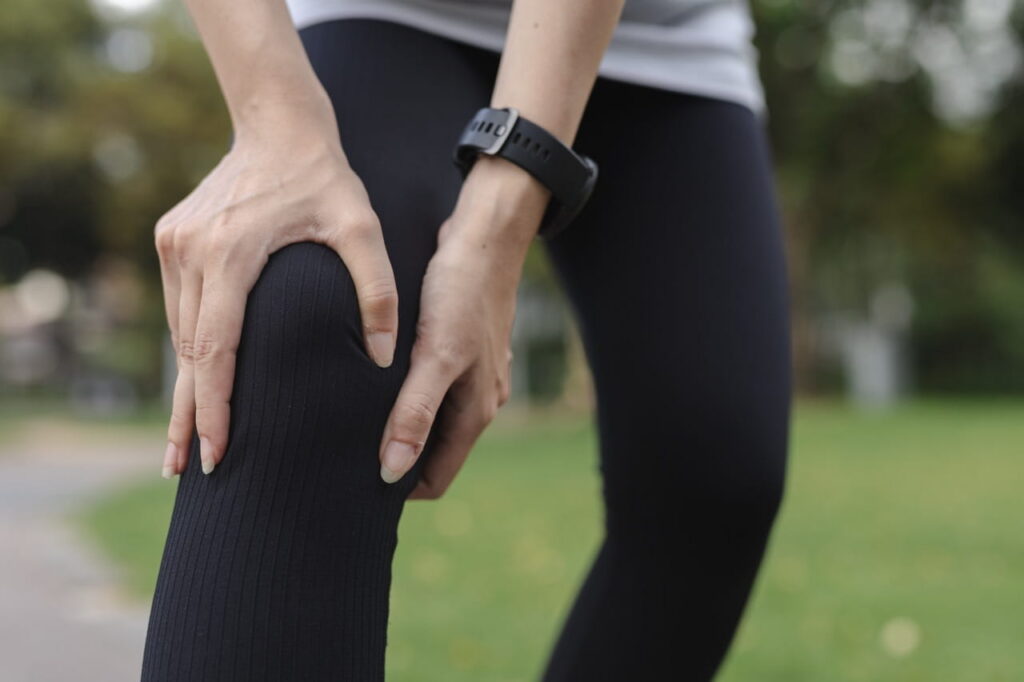
Walking Mechanics Usually Change Throughout Recovery
Everyone’s recovery progresses differently, but most patient’s gait during the first week after surgery looks very different from their gait several months later.
One reason for this is that swelling and inflammation are particularly common early on. These symptoms can make the knee feel tight and restrict how comfortably it bends and straightens. Even small limitations in movement can affect the mechanics of walking.
Muscle weakness is another major consideration, as the early, more sedentary stages of recovery can lead to slight atrophy in the quadriceps and the muscles around the hips and lower leg, which are particularly important for controlling the knee during weight-bearing activities and ensuring stability and coordination, respectively. Insufficient strength in either of these muscle groups can make walking and climbing stairs after a knee replacement difficult.
How Physical Therapy Can Help
Rehabilitation is all about improving movement quality as strength and range of motion return. To accomplish this, your physical therapist may incorporate low-impact, joint-friendly exercises that improve these five aspects of your physical health:
- Strength
- Flexibility
- Balance
- Coordination
- Functional movement
Since rehabilitation plans are tailored to the individual, there’s no way to tell exactly which exercises you’ll be asked to try after knee replacement surgery. Still, many plans include things like sit-to-stands and step-ups, along with walking practice to reinforce more efficient movement patterns.
Patience and Consistency are Key
As you heal and move through physical therapy, progress should be gradual—if you try to increase activity too quickly, you can interfere with movement quality by aggravating swelling or discomfort.
It is best to closely follow your healthcare provider’s recovery tips while at home, which may include practicing certain exercises and being cognizant of your movement patterns. Over time, you may find that movements that once required conscious effort feel more automatic. Confidence in your new knee also tends to improve as the knee becomes stronger and daily activities become easier.
Knowing When to Discuss Gait Changes With Your Surgeon
Some degree of uneven walking is expected during recovery, particularly when a patient is still dealing with swelling, weakness, stiffness, or limited mobility. The focus should be on whether the overall trend is moving in the right direction.
If walking gradually becomes easier and you can feel your surgical leg becoming stronger and more mobile over time, an uneven gait after knee replacement surgery may simply reflect where you are in the rehabilitation process. However, persistent or worsening symptoms should not be dismissed as normal.
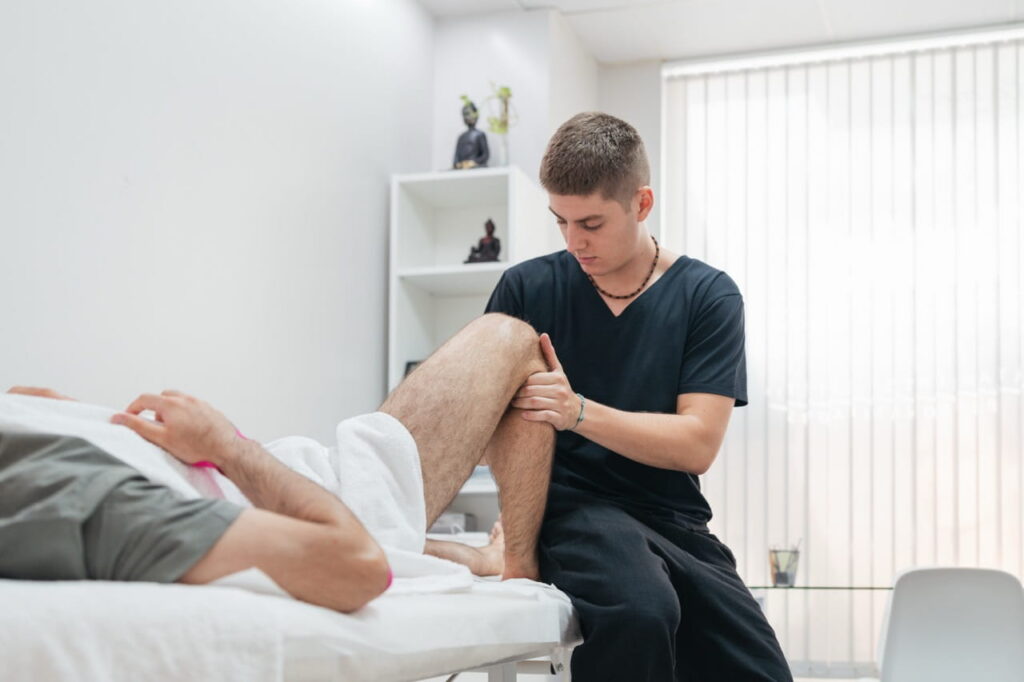
Unfortunately, patients sometimes hesitate to mention gait concerns because they assume they should simply wait longer. Communicating with your care team can provide reassurance when symptoms are part of normal recovery and help identify issues that may benefit from additional treatment—in rare cases, sometimes patients get knee revision surgery shortly after their first replacement to address issues like periprosthetic joint infection, early mechanical loosening, and joint instability.
Looking Out For Red Flags
Your recovery does not need to look perfect at every stage. It should, however, be monitored for meaningful progress. Some examples of scenarios that warrant contacting your surgical team are:
- Increasing or worsening knee pain
- Difficulty bearing weight or persistent feelings of instability
- Increasing stiffness rather than gradual improvement
- A noticeable, sudden decline in mobility
- Symptoms that interfere with normal daily activities
These symptoms do not always mean there is a problem with the implant. They simply provide a reason for the surgical team to evaluate what may be contributing to the change.
Concerns of Uneven Leg Length After Knee Replacements
Some patients report that one leg feels longer or shorter after knee replacement surgery. Although this can be concerning, particularly when the sensation affects walking or creates a feeling of imbalance, the perception of leg unevenness does not necessarily mean that there have been any actual structural changes—instead, it may be due to one of these three reasons:
- Knee alignment – Arthroplasties can correct alignment that was affected by arthritis, deformity, or years of altered movement. Once the knee is positioned differently, the leg may feel different until the muscles and soft tissues adapt.
- Swelling and weakness – A patient who cannot fully straighten the knee may feel as though that leg is shorter.
- Changes in pelvic positioning – The way you hold your lower body can alter walking mechanics and how your legs feel relative to one another.
For many knee replacement patients, the sensation of uneven leg length after knee replacement surgery becomes less noticeable as swelling decreases, range of motion improves, and muscles regain strength. Nevertheless, persistent concerns about leg length or balance should be discussed with the surgical team to ensure the knee doesn’t require further attention.
Returning to Comfortable, Confident Mobility
An uneven gait after knee replacement surgery can be frustrating, particularly when patients expected their walking to immediately feel natural after their procedure. In reality, walking is a skill that the body may need to relearn, and it should get easier as swelling decreases, range of motion improves, and strength returns.
Having an easy-to-reach, knowledgeable surgical practice like the Joint Replacement Center of Scottsdale can ease your mind as you learn to walk comfortably and confidently again. We are proud to be at the heart of so many successful patient stories, and we hope yours is next. It brings us so much joy to help people return to everyday activities like walking with greater independence.
If you want to know more about our individualized treatment plans and the recovery guidance we offer to patients, contact the Joint Replacement Center of Scottsdale today.