

Executive Summary
- Hip pain when sitting is common, and it may develop gradually, often becoming more noticeable after prolonged periods of inactivity.
- Pain that seems to come from the hip joint may actually originate from surrounding muscles or tendons, the lower back, or nearby nerves.
- People who experience hip pain when sitting should take regular movement breaks, improve their workstation ergonomics, stretch, and strengthen the muscles around their hips.
- If your pain worsens or symptoms like reduced mobility or sleep disruption are hindering your daily life, contact an orthopedic specialist so you can identify the underlying cause and begin appropriate treatment.
What Happens to Your Hips When You Stay Still
Hip pain when sitting is more common than many realize, affecting adults of all ages and lifestyles. Maybe you have noticed discomfort after spending hours at a desk, or maybe you have felt stiffness after a long car ride or an evening on the couch.
Remaining in one position for too long can place unnecessary stress on your hip joints and surrounding structures, especially if you have an underlying issue. As a result, you may notice the gradual onset of symptoms—what starts as mild stiffness or an occasional ache can transform into unignorable hip pain after sitting too long.
The timing and location of your symptoms can help you find and address potential underlying issues. For example, pain deep in the groin may point to a different source than discomfort radiating through the thigh or buttocks. Similarly, feeling temporary hip pain when standing up from a sitting position may suggest something different than discomfort that persists throughout the day.
The guide below can help you better understand what may be contributing to your hip pain and when to consider hip replacement surgery or alternative therapies for relief.
The Prevalence of Hip Pain When Sitting or Getting Up
Some positions cause people with hip-related disorders more pain than others. About 47% of people with femoroacetabular impingement syndrome (FAIS) say they feel more hip pain when sitting vs. standing, and 52% of people with hip dysplasia agree.
Even for people without these disorders, hip pain when standing up from a sitting position is still incredibly common. One of the main reasons for this is that after tissues have remained in a flexed position for an extended period of time, it can be jarring for them to suddenly move and support body weight, causing stress and irritation.
Not All Hip Pain Comes From the Hip Joint
People often assume that hip pain when sitting strictly means there is something wrong with the hip joint itself. However, pain around the hip can originate from many nearby structures, while still feeling like it is coming directly from the hip.
For example, irritation in the lumbar spine has been known to cause referred pain that travels into the hip or buttock. Tight hip flexors, strained gluteal muscles, or inflamed tendons can also produce discomfort that mimics joint problems.
What Other Body Parts Could Be Causing Hip Pain?
Some examples of bodily structures that commonly contribute to hip pain include:
- Hip joint cartilage – Issues may manifest as deep groin pain or stiffness.
- Tendons – Problems often cause pain with movement or activity.
- Bursa – Complications typically lead to tenderness on the outside of the hip.
- Lower back – Issues can cause pain that radiates into the hip or leg.
- Sciatic nerve – Problems can manifest as burning or shooting discomfort.
- Muscles – Complications may lead to tightness, aching, or weakness.
Because multiple structures can produce similar symptoms, self-diagnosis can be misleading. Someone experiencing hip pain after sitting too long may assume hip arthritis or bursitis is to blame when the real issue is muscle tightness or referred pain from the spine.
Identifying the exact source often requires a comprehensive evaluation rather than relying on symptoms alone.
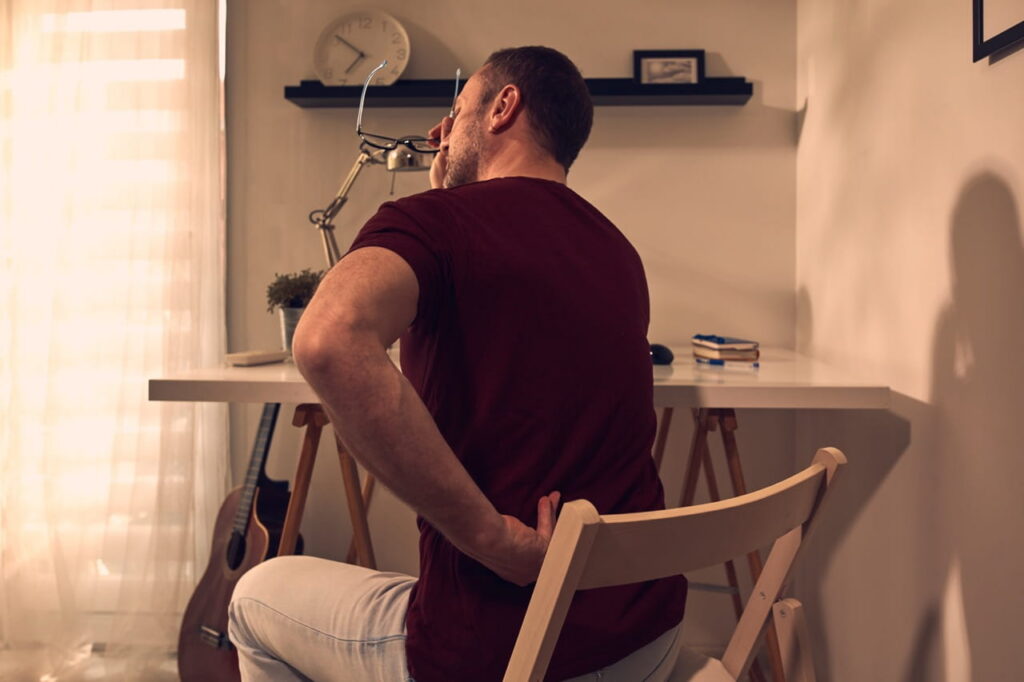
Treat Symptoms as Clues
The way hip pain behaves can reveal important information about what may be causing it. Pay attention to when symptoms occur and what makes them better or worse.
Would you describe your discomfort as stiffness that improves after moving around, or is it more of a sharp pain that solely occurs when you rise from a chair? Do you notice clicking or a catching sensation during movement?
Share this information with your healthcare provider so you and a medical professional can work together to narrow down possible causes.
What Conditions May Be Causing Your Symptoms
Several conditions may contribute to hip complications when sitting or transitioning to standing, as seen in the table below.
| Condition | Common Symptoms | Typical Pain Pattern |
| Osteoarthritis | • Stiffness • Groin pain | Often improves after moving around |
| Hip impingement | • Pinching sensation • Pain with bending | Typically worsens during deep hip flexion or prolonged sitting |
| Bursitis | • Tenderness on the outside of the hip • Pain when lying on the affected side | Some stretches and exercises can provide hip bursitis relief temporarily |
| Tendon irritation | • Dull aches around the hip, where muscles connect to bone • Crackling, grating, or popping sensation | Often develops during activity or after prolonged sitting |
| Referred back pain | • Deep ache in hip and lower back • Dull, cramping sensation | May radiate from the lower back into the hip or buttock |
| Muscle tightness | • Stiffness • Reduced flexibility | Often eases with gentle movement and stretching |
Interestingly, symptom patterns often provide more information than pain intensity. Mild pain that consistently appears after sitting for long periods may reveal more about the source of discomfort than severe pain that occurs only occasionally.
Understanding those patterns can help guide treatment and prevent unnecessary guesswork.
The Role Modern Life Plays in Hip Discomfort
Modern lifestyles have changed the way many people move, and not always for the better. For instance, long workdays at a desk, lengthy commutes, and increases in screen time are becoming more prevalent, resulting in many adults spending hours with their hips in the same position. While sitting itself is not inherently bad, remaining still for extended periods can influence how joints and muscles function.
The hip is designed for movement—walking, climbing stairs, changing positions, and performing daily activities help maintain mobility and circulation. When those movements become less frequent, muscles can tighten, joints may become stiff, and surrounding structures may compensate in ways that contribute to discomfort.
Lifestyle Factors That Can Contribute to Hip Pain When Sitting
Some common lifestyle factors that can increase your risk of hip pain when sitting or getting up include:
- Desk work – A traditional workday behind a computer can lead to prolonged hip flexion and muscle tightness.
- Long commutes – The limited movement and sustained sitting posture while driving can lead to stiffness and reduced circulation.
- Sedentary habits – Excessively streaming shows/movies and engaging in other seated activities can lead to fewer movement breaks throughout the day.
- Poor posture – Sitting in a non-anatomical position can put uneven stress on joints and muscles.
Interestingly, even physically active individuals may develop hip pain after sitting too long. A person who exercises regularly but spends eight hours sitting at work may still experience stiffness and discomfort because activity during one part of the day does not completely offset prolonged immobility. Therefore, movement throughout the day matters just as much as dedicated joint mobility exercises.
Small Changes That Can Make a Big Difference
Fortunately, managing hip pain when sitting rarely requires dramatic lifestyle changes. Chances are, you can just make small adjustments, as long as you perform them consistently, and still notice a meaningful difference.
Some examples of small changes you can make to help restore circulation and allow the hips to move through different positions are:
- Changing positions regularly while sitting
- Standing up for a few minutes every half hour or so
- Taking short walks daily
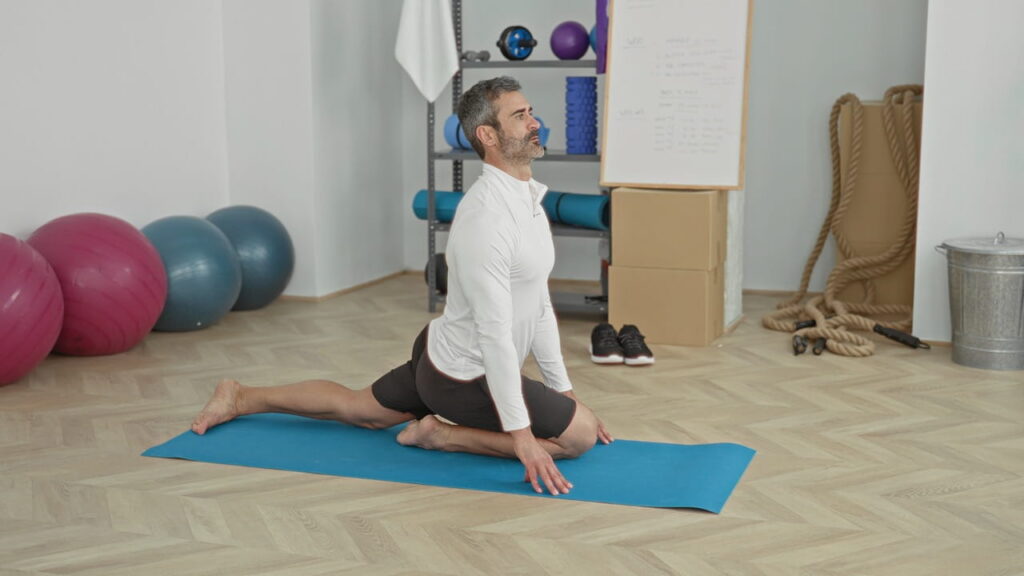
- Working through gentle hip pain stretches at home
- Build the muscles around your hip joints for support
In addition to frequent movement breaks and strength training, changing your workstation setup can also play a role in minimizing hip pain from sitting. Ensure proper chair height, purchase supportive seating, and position screens at eye level to help improve posture and reduce unnecessary stress on the hips.
In many cases, symptom management is most successful when multiple factors are addressed rather than relying on a single solution.
When Hip Pain Deserves a Closer Look
Not every episode of hip discomfort requires medical attention. You may be able to quickly resolve temporary stiffness after a long drive or sitting through a movie with movement and stretching. However, some symptoms deserve further evaluation, such as:
- Pain that gradually worsens
- Hip complications that limit your range of motion
- Pain or inflammation that interrupts sleep
- Persistent limping
If you have any symptoms that last several weeks or your ability to perform daily activities has been hindered, call a qualified professional as soon as possible. An orthopedic evaluation can help determine if joint pain is linked to arthritis, tendon problems, hip impingement, referred pain, or another source entirely.
The sooner persistent pain is evaluated, the sooner an appropriate treatment plan can begin. Plus, if they decide you would benefit from surgical intervention, they may be able to help you minimize pain while you wait for a hip replacement or whatever treatment you need.
Finding the Cause Before Treating the Symptoms
Hip pain when sitting may seem like a simple problem, but the underlying causes are often more complex than they first appear. While occasional stiffness is common, ongoing discomfort deserves more than temporary symptom management. Lasting relief typically comes from identifying what is actually driving the pain.
Whether you’re experiencing hip pain when standing up from a sitting position or while actively sitting, you should reach out to the Joint Replacement Center of Scottsdale. We can carry out a personalized evaluation to identify the root cause of your hip-related troubles. Then, we can use this information to guide treatment options that fit your goals and lifestyle. In many cases, we don’t need to jump directly to surgery, as we offer other alternative therapies like ARPWAVE and pulsed electromagnetic field therapy.
Contact the Joint Replacement Center of Scottsdale today to schedule a consultation and receive an expert assessment with personalized guidance.