

Executive Summary
- Leg weakness after knee replacement surgery is common, particularly during early recovery, because tissue disruption and the resulting swelling, pain, and reduced activity can temporarily affect muscle activation and strength.
- Hamstring, calf, shin, and quad weakness after knee replacement can make walking, climbing stairs, standing from a chair, and other everyday activities difficult even when the knee itself is healing normally.
- Strength recovery often takes longer than pain relief and varies based on factors such as pre-surgery strength and activity level, overall health, and rehabilitation progress.
- Worsening weakness, frequent giving way, difficulty bearing weight, and sudden changes after improvement should be discussed with your surgical team as soon as possible.
Understanding Leg Weakness After Knee Replacement Surgery
Many people report weakness after knee replacement surgery, noting that their legs feel unusually tired or unsteady despite potential improvements in pain management and other aspects of their recovery. Having weak thigh muscles can complicate activities that once felt simple, such as walking across a room or standing after sitting in a chair.
Although it can still be frustrating to work through, leg weakness after knee replacement surgery is a normal part of most patients’ recoveries. This weakness can often be traced back to surgical trauma, swelling, pain, or reduced physical activity. With time and a well-structured rehabilitation plan, most people are able to restore the strength and coordination of the muscles surrounding the knee.
The guide below can help you understand how leg weakness manifests in other patients’ stories so you can tailor your expectations. Nevertheless, any concerns you have should be discussed with your surgical team, as they can assess your unique situation and help you understand if the hamstring, shin, calf, or quad weakness you feel after your knee replacement is normal.
Exactly How Weak Do Legs Get After Knee Replacement Surgery?
When a group of 20 patients was assessed 1 month after their total knee replacement surgery, on average, they exhibited muscle strength loss of 17% to 42% across four major muscle groups of the leg. The table below shows how each individual muscle group fared during this one-month check-up.
| Muscle Group | Weakness Compared With Preoperative Levels | What This May Feel Like for Patients |
| Knee extensors (quadriceps) | 42% weaker | Difficulty straightening the knee, climbing stairs, standing from a chair, or feeling confident when walking |
| Knee flexors (hamstrings) | 34% weaker | Difficulty controlling the leg during walking or bending the knee, along with a feeling of overall leg weakness |
| Dorsiflexors(shin muscles) | 18% weaker | Less control when lifting the foot and a possible feeling of reduced stability while walking |
| Plantarflexors(calf muscles) | 17% weaker | Reduced push-off when walking and less strength when climbing stairs or walking longer distances |
Is Leg Weakness After Knee Replacement Surgery Permanent?
Thankfully, most of the patients in the aforementioned study recovered to preoperative levels within 3 to 6 months after surgery, illustrating that hamstring, shin, calf, and quad weakness after knee replacement surgery is usually temporary, as long as the patient gets adequate rest and stays consistent with the rehabilitation plan set by their medical provider.
How Knee Replacement Surgery Affects Muscle Strength
Surgery can temporarily interfere with normal muscle function in both direct and indirect ways. Some examples include:
- Surgical trauma – Even minimally invasive knee surgery temporarily disrupts the tissues surrounding the joint and can affect the muscles’ ability to contract normally.
- Swelling – Fluid buildup around the knee can inhibit muscle activation, particularly in the quadriceps, making it harder to engage the muscles fully if you don’t take steps to reduce swelling after knee replacement surgery.
- Pain – Discomfort can cause patients to unconsciously limit movement and muscle activation, which can contribute to temporary weakness.
- Reduced activity – Spending more time resting and putting less weight on the surgical leg can rather quickly reduce muscle strength and endurance.
- Changes in movement patterns – Patients may initially walk differently or rely more heavily on assistive devices, which can temporarily change how the muscles operate during everyday activities.
Together, the factors above can complicate otherwise simple activities, such as walking, standing from a chair, or climbing stairs after a knee replacement.
Pain Usually Fades Before Strength Returns
Although pain is a contributing factor to why many patients’ muscles feel fatigued or unsteady after knee surgery, pain relief often comes before leg strength returns. In fact, your care team will likely give you tips for managing pain immediately after surgery, from medication usage to icing the area, but rebuilding the quadriceps, hamstrings, and calf and shin muscles takes substantial time.
Strength Recovery Looks Different for Every Patient
Comparing your recovery with another knee replacement patient can create unrealistic expectations because two people can undergo similar procedures and still have very different timelines for rebuilding strength, endurance, and confidence.
What Influences Post-Surgery Strength Regeneration?
Several factors can influence how quickly strength returns for someone who just underwent a knee replacement, including things like:
- The patient’s age and overall health
- Their pre-surgery strength and activity level
- How severe a joint condition they had before surgery
- How long they spent living with reduced mobility
- Their consistency with their prescribed rehabilitation plan
- How their physical activity has progressed after surgery
- Whether they had a traditional or minimally invasive knee replacement
Therefore, someone who remained highly active before surgery may have a different recovery experience than someone whose arthritis significantly limited movement for several years. Similarly, elderly patients may require more recovery time than someone on the younger side.
Get Individualized Support
The Joint Replacement Center of Scottsdale builds treatment plans around each patient’s unique needs to support optimal surgical outcomes. We also use minimally invasive surgical techniques, which can facilitate recovery.
Rebuilding Strength Through Movement and Rehabilitation
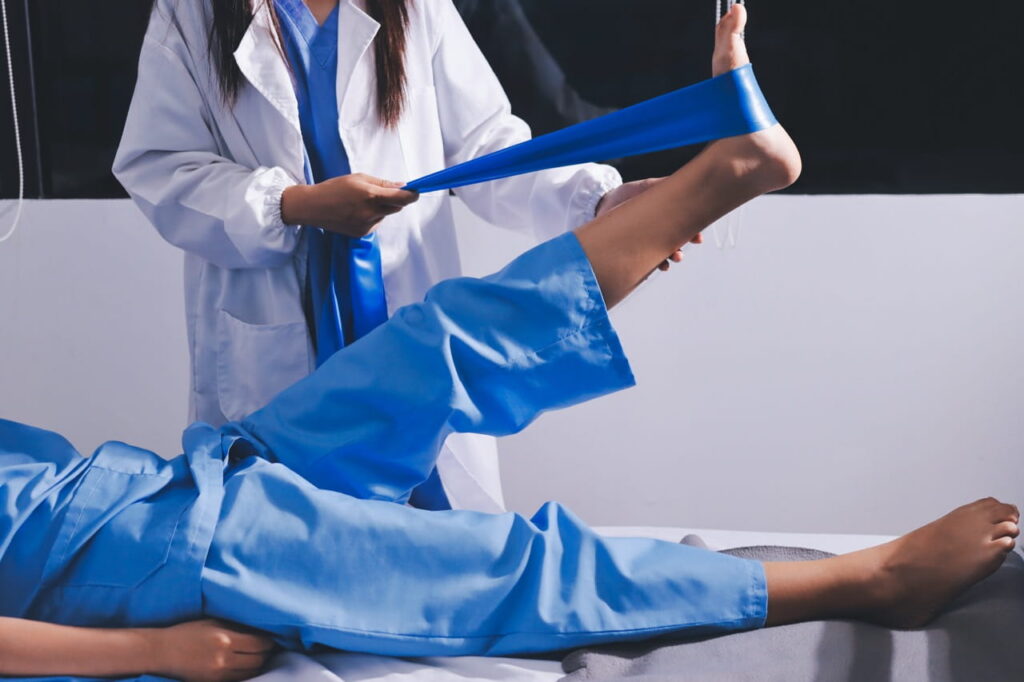
Rehabilitation plays a central role in addressing weak thigh muscles after knee replacement by progressively increasing the patient’s activity levels to help the muscles surrounding the knee regain strength while also retraining the movement patterns needed for everyday activities.
In addition to making the muscles stronger, rehabilitation helps patients relearn how to use those muscles efficiently. However, to get the best results possible, it is always a good idea to adhere to the exercises and routine that the doctor prescribes for you personally. Trying to accelerate strength gains by doing significantly more activity than recommended can increase soreness and swelling and may interfere with recovery.
What Does Rehabilitation Focus On?
Rehabilitation after knee replacement surgery focuses on restoring strength, range of motion, balance, walking mechanics, and the ability to safely perform everyday activities as the knee heals. The table below breaks down each focus of physical therapy after knee replacement surgery and how they work to enhance the patient’s quality of life.
| Common rehabilitation focus | How it may be prioritized in rehab plans | Overarching goal |
| Quadriceps strength | Leg raisesSeated knee extensionsSit-to-stands | Improve the ability to straighten and control the knee |
| Hip and glute strength | BridgesStanding hip exercisesSide-stepping | Improve leg stability and support during movement |
| Hamstring strength | Hamstring curlsControlled bending exercises | Support knee movement and stability |
| Range of motion | Gentle knee bending and straightening exercises | Restore flexibility and functional movement |
| Balance and stability | Weight-shiftingSupported single-leg exercises | Improve confidence and control while standing and walking |
| Walking mechanics | Gait trainingProgressive walking, reducing reliance on assistive devices | Help restore an efficient walking pattern |
| Endurance | Gradually increasing walkingLow-impact cardiovascular activity | Build the stamina needed for daily activities |
As strength improves, everyday movements can become more controlled and require less effort. Patients may also begin to feel more confident putting weight through the surgical leg.
Symptoms Should Trend Toward Improvement
Some degree of weakness is expected during recovery, but you should notice symptoms slowly improving over time. If you are dealing with persistent or worsening problems, especially ones that interfere with your ability to walk or perform everyday activities, make sure you contact your medical provider as soon as possible.
Signs Your Ongoing Weakness Needs Evaluation
Some examples of specific experiences that warrant a professional evaluation are:
- Weakness that continues to worsen
- New instability or frequent giving way
- Difficulty bearing weight
- A sudden change after a period of improvement
- Weakness accompanied by significant or increasing pain
- New swelling or other concerning symptoms
The symptoms above do not automatically indicate a complication. However, an evaluation can help determine what may be contributing to the weakness and whether changes to your rehabilitation or treatment plan are appropriate.
Getting Guidance When Recovery Feels Uncertain
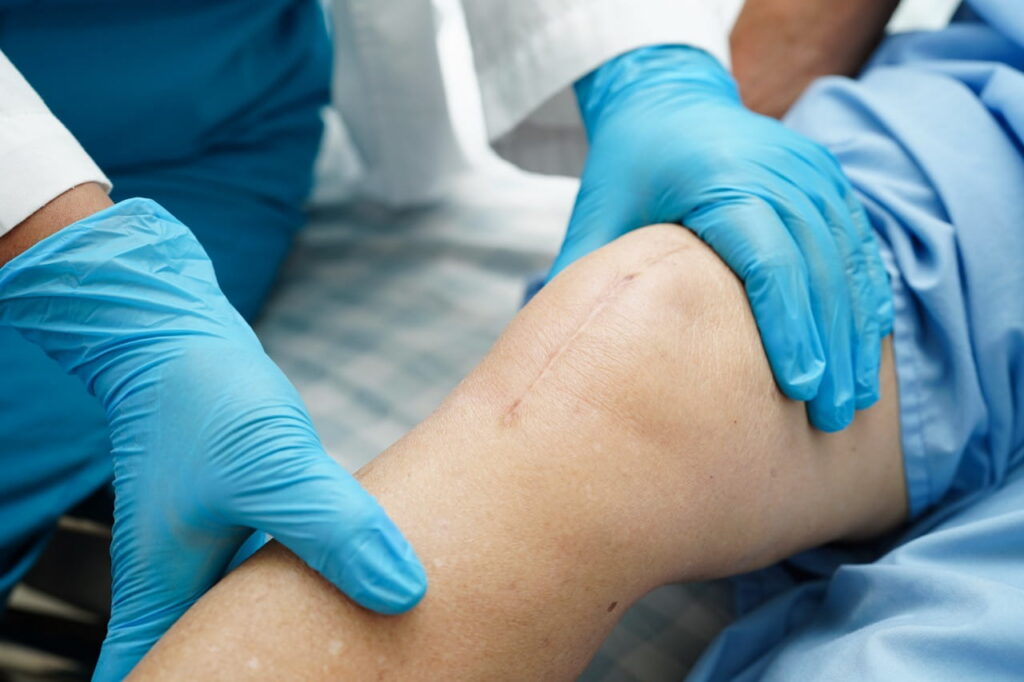
Knee replacement recovery continues long after the patient’s incision heals. Recovery goes deeper than the surface-level knee replacement scar—the joint mechanics underneath are the main focus. The muscles surrounding the knee must regain strength, coordination, and endurance, while your body gradually becomes comfortable with normal movement again.
For many patients, leg weakness after knee replacement improves steadily through rehabilitation and progressive activity. However, there isn’t a one-size-fits-all timeline that applies to everyone. The amount of weakness you experience and how quickly it resolves can depend on individualized factors like your condition before surgery and your rehabilitation progress.
The Joint Replacement Center of Scottsdale provides consistent support to all of our patients, from their first orthopedic consultation through rehabilitation. We can help you determine whether your symptoms are consistent with normal recovery so that you can have peace of mind or start taking the necessary steps to get back on track.
Contact our center to discuss any questions or concerns you may have about muscle weakness after knee replacement surgery or other aspects of recovery.