

Executive Summary
- In the weeks following a total knee replacement, pain at night is common and may be influenced by inflammation, activity levels, and sleeping position.
- For most patients, soreness, aching, stiffness, and tenderness fade after a few months, once they have had sufficient time to heal and adapt to their new knee.
- With their care team’s permission, patients may be able to improve nighttime comfort by elevating and icing the area, taking medication, using pillows as support, and moving throughout the day.
- Increasing or severe pain, redness, incision drainage, fever, or significant swelling, especially in the calf area, should be evaluated by the patient’s surgical team as soon as possible.
Symptoms Take Time to Disappear After Total Knee Replacement Surgery
The satisfaction rate for total knee replacements is 89.7%, meaning many patients experience a significant decrease in pain and other joint-related complications after healing from their procedure. However, it takes time for these improvements to set in fully; the joint needs to heal from the surgical trauma and adapt to the new prosthesis.
Therefore, for the first few weeks after a total knee replacement, pain at night is common, though it usually fades within a few months. In the meantime, patients may be able to achieve short-term relief from knee replacement pain at night by elevating their leg, using a cold compress, taking medication, and supporting themself with pillows.
Nevertheless, each patient is unique, so it is important to ask your medical provider what helps pain at night after knee replacement based on your specific situation. Still, the guide below can give you a basic understanding of what many other patients experience post-surgery to inform the discussion with your care team.
How Common is Total Knee Replacement Pain at Night
It is very common for patients to experience knee replacement night pain, even when they feel relatively comfortable during the day. In fact, approximately 46.6% of patients report night pain until three months after their total knee replacement surgery. This does not necessarily mean something is wrong with the joint or that the recovery is off track; it can simply take time for the leg to reach a state of normalcy.
Fortunately, the number of people who report total knee replacement pain at night decreases significantly to 7.4% when assessed one year after the surgery, illustrating the exponential improvement most people feel after a few more months have passed. Still, it is always a good idea to discuss your healing process with your care team to ensure everything remains on track.
Why Nights Can Feel More Difficult During Recovery
Several factors can make discomfort more noticeable once the day winds down, including:
- Accumulated activity – Although they are integral to recovery, activities like walking, exercising, and physical therapy after knee replacement can all cause temporary increases in swelling and soreness.
- Swelling – The body’s inflammatory response can cause fluid accumulation around the knee that can contribute to pressure, stiffness, and discomfort later in the day.
- Changes in position – Sitting or lying in one position for an extended period can increase stiffness and make the knee feel uncomfortable.
- Muscle fatigue – The muscles supporting the knee may become tired after working throughout the day, potentially increasing discomfort or a sense of weakness.
- Medication timing – If pain medication is taken earlier in the day, its effects may diminish by bedtime.
- Sleep position – Certain sleeping positions after a knee replacement may place pressure on the healing knee or surrounding tissues, making discomfort more noticeable.
In addition to the list above, reduced distraction also plays a role. Daytime activities can take your attention away from discomfort, while a quiet bedroom can make pain and stiffness feel more prominent.

What a Normal Recovery Feels Like at Night
Although many patient stories showcase a relatively quick improvement in quality of life after knee replacement surgery, pain rarely disappears immediately. Most patients’ symptoms change as tissues heal, swelling decreases, strength returns, and the knee becomes accustomed to normal movement again.
In the nights following surgery, patients often experience complications like:
- Aching around the knee or tenderness around the incision
- Soreness, especially if they were physically active during the day
- Stiffness after remaining in one position
- A feeling of pressure from swelling
These common post-surgery symptoms can make it difficult to get good sleep following surgery.
When Does Night Pain Usually Improve?
Unfortunately, there is no one-size-fits-all timeline for when knee replacement pain at night will completely disappear. Recovery speed depends on various factors, from the invasiveness of the procedure to the patient’s activity level, overall health, and adherence to their rehabilitation plan. Nevertheless, nighttime discomfort usually lessens as the tissues heal, and the knee regains strength and mobility.
The table below can give you an idea of how nighttime pain may progress after a minimally invasive knee replacement surgery.
| Recovery Stage | What Nighttime Pain May Feel Like |
| First few weeks | Aching, soreness, swelling, incision tenderness, and stiffness are common and may make sleeping difficult. |
| 4–6 weeks | Pain often begins to become more manageable, although increased activity or physical therapy can still cause uncomfortable nights. |
| 6–12 weeks | Many patients experience fewer disruptions from pain as swelling decreases and strength and mobility improve. |
| 3–6 months | Nighttime discomfort is often significantly less noticeable, although occasional soreness may occur after more strenuous days. |
| 6–12 months | Some patients may continue experiencing occasional stiffness or discomfort as the knee continues to adapt and recover, but many report being pain-free. |
These timeframes are general rather than guarantees. Everyone heals differently, so comparing your progress to others isn’t always a good indication of how your personal recovery is going. Plus, progress can ebb and flow in a matter of days.
The Healing Process Can Feel Like a Roller Coaster
Recovery tends to be nonlinear. You may have several relatively comfortable nights followed by a more difficult one, particularly after increasing your activity level or completing a challenging physical therapy session, as the knee may need time to adjust to higher demands as strength and endurance improve.
It can be easy to become discouraged after a particularly uncomfortable night. However, recovery from knee replacement should be evaluated over days and weeks rather than based on a single evening.
Instead of asking whether every night is better than the one before, look at the broader trend in pain, mobility, swelling, and function to get a more useful picture of your recovery. Four things you can ask yourself to understand if your overall recovery is moving in the right direction are:
- Am I walking farther?
- Is my range of motion improving?
- Am I becoming more independent?
- Is my pain generally becoming easier to manage?
These broader improvements can provide a more meaningful picture of recovery.
Red Flags That Require Further Evaluation
Most nighttime discomfort during recovery is not a sign of a serious complication. However, certain symptoms should prompt you to contact your surgical team rather than simply waiting for them to resolve.
Seek medical guidance if you experience things like:
- Rapidly worsening or severe pain
- Significant or rapidly increasing swelling, especially in the calf
- Increasing redness or warmth around the incision
- Drainage from the incision
- Fever or other signs of infection
- New inability to bear weight or difficulty moving the knee
The pattern of your symptoms matters. For example, gradually improving soreness is generally different from pain that suddenly becomes severe after your recovery had been progressing normally. So, if something feels substantially different from what you have experienced previously, it is reasonable to contact your surgical team for guidance.
Knee Pain’s Impact on Sleep
Not only is post-surgery pain frustrating, but it can also interfere with a patient’s ability to get comfortable and stay asleep. Discomfort may make it difficult to find a suitable sleeping position, while swelling, stiffness, and soreness can cause the individual to wake throughout the night.
Why Sleep Is Important After Knee Replacement
Getting adequate sleep after a knee replacement is an important part of recovery, as the body performs many of its repair processes while at rest. Insufficient sleep can also leave patients feeling more fatigued and less able to participate in rehabilitation.
Additionally, sleep can influence how patients experience pain. When sleep is repeatedly interrupted, discomfort may feel more difficult to manage, creating a cycle in which pain makes it harder to sleep, and poor sleep makes the next day more difficult.
Tips for Sleeping Comfortably During Knee Replacement Recovery
Several strategies commonly help patients sleep better following surgery, including things like:
- Using supportive positioning – A pillow or other approved support may help you find a more comfortable position and reduce pressure on the surgical leg.
- Icing the area before bed – If recommended by your care team, icing before bedtime may help manage swelling and discomfort.
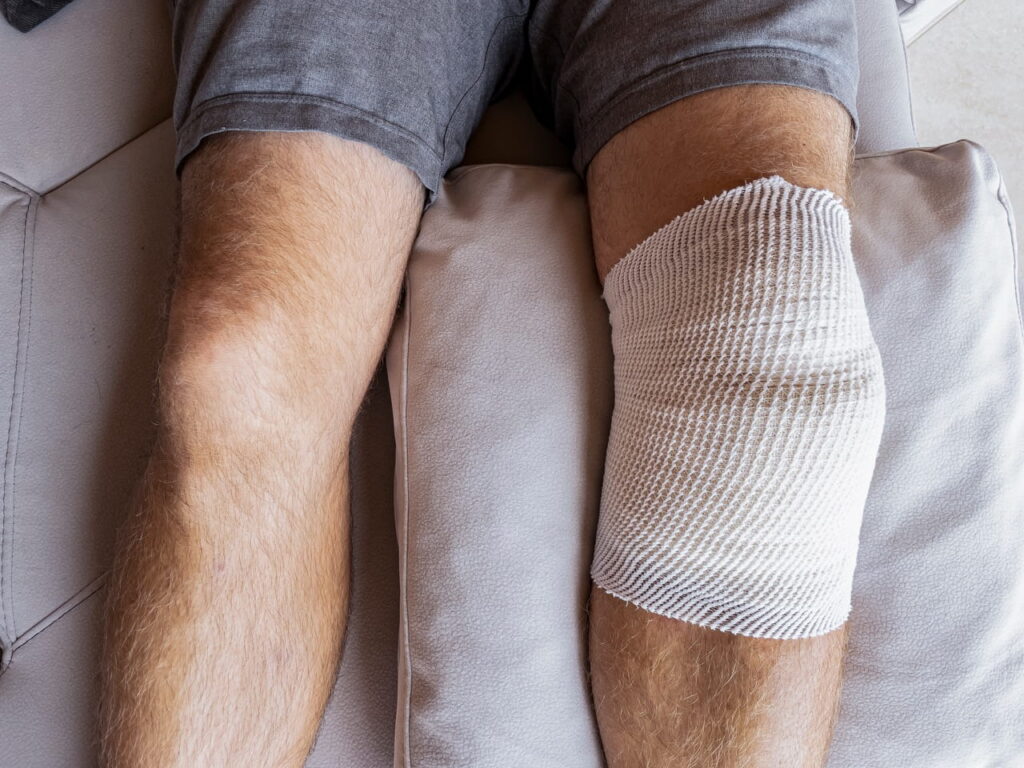
- Elevating as instructed – Elevating the leg can help reduce swelling after knee replacement surgery, which may make the knee more comfortable.
- Timing medications appropriately – If you have prescribed or recommended pain medication, take it according to your surgical team’s instructions rather than waiting until pain becomes difficult to control.
- Keeping moving during the day – Gentle, prescribed movement can help prevent the stiffness associated with prolonged inactivity.
- Avoiding overdoing activity – A sudden increase in walking or exercise after knee replacement surgery can contribute to increased soreness and swelling later that night.
What helps pain at night after knee replacement varies between patients, so follow your surgeon’s personalized tips for managing pain after surgery.
Knowing When It’s Time for a Follow-Up
If total knee replacement pain at night continues to interfere with sleep, becomes progressively worse, or fails to improve despite following your recovery plan, talk with your surgical team. Persistent pain deserves attention, particularly when it is accompanied by swelling, instability, reduced mobility, or another change in function.
The Joint Replacement Center of Scottsdale helps patients evaluate whether their symptoms are consistent with the expected recovery process or whether something else may be contributing to discomfort. In some cases, adjustments to rehabilitation, activity levels, medications, or other aspects of their recovery plan may be appropriate.
For most patients, nighttime discomfort gradually becomes less noticeable as healing progresses and strength and mobility return. However, if you have questions about what helps pain at night after knee replacement or are concerned about ongoing symptoms, contact the Joint Replacement Center of Scottsdale to schedule a follow-up and discuss your recovery.