

Key Takeaways
- Modern hip replacements can provide many years of improved mobility, but implants can eventually experience wear or other changes that require evaluation.
- New or worsening pain, stiffness, reduced mobility, or a feeling of instability can be signs that something has changed, although these symptoms can have many possible causes.
- Orthopedic specialists use a combination of medical history, physical examination, imaging, and assessment of the implant and surrounding bone to determine what may be causing new symptoms.
- Revision hip replacement is not automatically necessary when symptoms develop. The appropriate treatment depends on the condition of the implant, the underlying cause, and the patient’s overall health and goals.
How Long Does a Hip Replacement Typically Last?
Modern hip replacement surgeries are highly successful and can provide decades of improved mobility and reduced pain, lasting 20 to 30 years or more for most individuals. However, no implant is designed to last forever—over time, the components of an artificial hip may experience normal wear, and changes can occur in the way the implant interacts with the surrounding bone and soft tissues.
So, hip replacements do wear out in certain circumstances, but the lifespan of a hip replacement can vary considerably from one patient to another. How long a hip replacement lasts depends on factors like the patient’s age during the hip replacement, their activity level, and the implant’s construction and positioning. Some implants may function well for decades without requiring additional surgery, while others may develop problems sooner.
The guide below lists common signs of a hip replacement wearing out; however, it is always best to bring up your concerns with your care team, as they have an understanding of your unique situation.
Why Do Hip Replacements Wear Out?
A hip replacement consists of components that must work together with the surrounding bone and soft tissues. As time passes, normal mechanical forces can contribute to wear of the implant components or changes where the implant interfaces with bone.
In some cases, an implant may become loose, or its fixation may change—wear particles can also contribute to changes in the surrounding bone or other tissues. It is important to note that these problems do not occur in every patient, and the presence of an older implant does not automatically mean it needs to be replaced.
Common Causes of Hip Replacement Failure
Not every aging hip replacement develops problems for the same reason. Some examples of issues that can affect a hip replacement over time are:
- Wear of the bearing surfaces
- Loosening of an implant
- Instability
- Recurring dislocations
- Infection
- Fractures around the implant
Understanding the possible cause matters because treatment depends on what has changed. A patient with implant loosening may require a different approach than someone experiencing instability or symptoms caused by the muscles and tendons surrounding the hip.
The Two Most Common Signs of a Hip Replacement Wearing Out
The two most common signs of a hip replacement wearing out are new or increasing pain and changes in mobility or joint function. While these symptoms can have many causes, a noticeable change in a previously well-functioning hip warrants a prompt evaluation from a dependable orthopedic specialist like Dr. Shane Martin.
1. New or Increasing Pain After Hip Replacement
A hip replacement that has functioned well for years but begins causing new discomfort deserves attention, especially if the pain continues or progressively worsens.
The location and pattern of pain can vary. Some different types of pain patients may experience are:
- Groin pain
- Thigh pain
- Pain around the outside of the hip
- Pain that occurs primarily with activity
- Pain while standing or walking
- Pain that occurs even while resting
However, pain alone cannot determine whether a hip replacement is failing. Muscle or tendon problems, changes in activity, inflammation, spine conditions, and other orthopedic issues can also cause discomfort around a replaced hip.
For that reason, patients should avoid assuming that new pain automatically means they need revision surgery. Instead, persistent or unexplained pain should be evaluated to determine its underlying cause. You may be able to resolve the issue with lifestyle modifications like trying hip pain stretches and exercises at home.
2. Changes in Mobility, Stability, or Joint Function
Pain is not the only potential indication that something has changed. Some patients first notice that everyday movements are becoming more difficult.
For example, you may begin experiencing increasing stiffness, reduced range of motion, difficulty walking longer distances, or changes in how you climb stairs. You may also notice that activities that previously felt routine now require more effort.
A feeling that the hip is unstable or that it may give way can also warrant evaluation. Changes in the relationship between the implant, surrounding bone, muscles, and other soft tissues can affect how the hip functions.
These changes can be subtle at first—you might notice that you are walking differently, avoiding certain activities, or relying more heavily on a handrail before recognizing that your hip function has declined.
A gradual change in function does not necessarily mean the implant is wearing out. However, when a previously well-functioning hip begins to behave differently, an orthopedic evaluation can help determine why.

Symptoms Can Appear Gradually
Keep in mind, changes in an older hip replacement do not always cause sudden or severe symptoms. Some symptoms patients first notice are small changes, such as discomfort that gradually becomes more frequent, needing to rest more often while walking, or avoiding activities they once enjoyed, like golfing, after their hip replacement has allowed them to do it comfortably for a while.
Because these changes can develop slowly, it can be helpful to pay attention to how your hip functions compared with previous months or years. A gradual decline does not necessarily mean the implant is failing, but it can be a reason to schedule an evaluation.
How Orthopedic Specialists Evaluate a Hip Replacement
Determining whether a hip replacement is wearing out requires more than looking at how old the implant is. Orthopedic specialists consider the patient’s symptoms, medical history, physical examination, and imaging findings together.
Some things a comprehensive evaluation may include are:
- Review of symptoms and medical history – Your surgeon may ask when symptoms began, how they have changed, and what activities make them better or worse.
- Physical examination – The hip’s range of motion, strength, stability, and surrounding tissues can provide important information about its function.
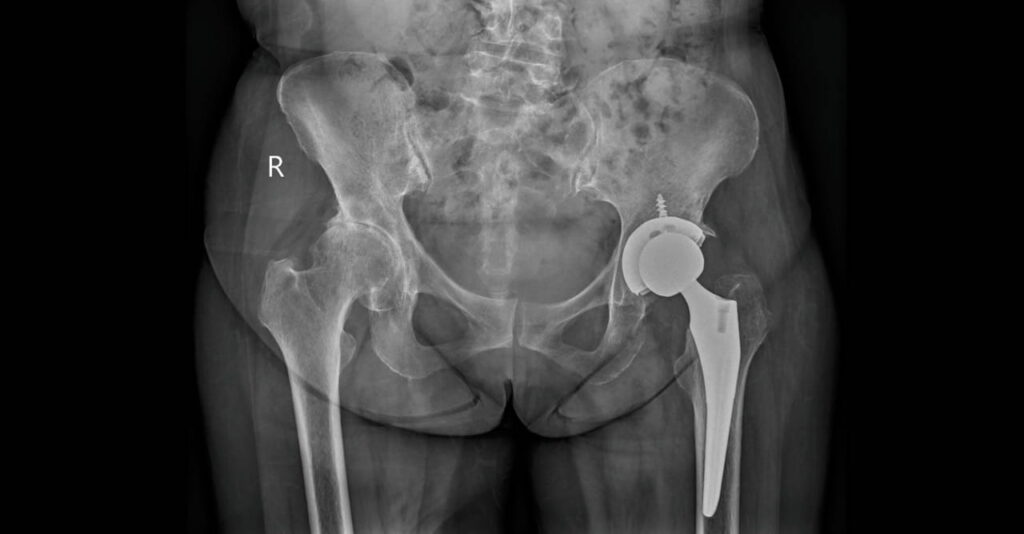
- X-rays or advanced imaging – Imaging can help identify changes in implant position, bone condition, or surrounding structures.
- Assessment of the implant and surrounding bone – Your surgeon can evaluate whether the components appear appropriately positioned and securely fixed.
This evaluation is particularly important because similar symptoms can have very different causes. For example, pain around a replaced hip could originate from the implant, surrounding soft tissues, the spine, or another condition.
The age of the implant provides useful context, but it does not determine whether revision surgery is necessary.
Why Follow-Up Matters Even When You Feel Fine
Some changes around a hip replacement may develop before they cause noticeable symptoms. For this reason, recommended follow-up appointments and imaging can help your orthopedic team monitor the condition of the implant and surrounding bone over time.
Routine monitoring can also give your surgeon a baseline for comparison if symptoms develop later. Your appropriate follow-up schedule depends on factors such as your implant, surgical history, age, symptoms, and surgeon’s recommendations.
When Revision Hip Replacement May Be Recommended
Total hip revision surgery involves removing and replacing the existing hip replacement components. It is a specialized procedure that may be recommended when a specific implant-related problem has been identified.
However, revision surgery is not automatically necessary simply because a patient develops pain or has an older implant. If an evaluation identifies another cause for the symptoms, treatment may focus on that underlying problem instead.
When revision surgery is being considered, surgeons may evaluate factors such as:
- Condition of the existing implant
- Implant positioning and fixation
- Bone quality, including extent of bone loss
- Severity and cause of symptoms
- The patient’s activity level, functional goals, and overall health
- How many previous hip surgeries have been performed
The recommended approach depends on what is happening inside and around the hip. In some cases, only a specific component may need to be addressed. In others, more extensive revision may be necessary.
Hip Replacement Revisions Are Usually More Complex
During a hip replacement revision, surgeons must often navigate scar tissue from the first hip replacement and make wider incisions to remove the old hardware. Due to the increased tissue disruption, hip revision surgery recovery timelines can be longer than what was experienced during the initial hip replacement.
Not Every Problem Requires Revision Surgery
Finding a change around a hip replacement does not automatically mean another operation is necessary. Depending on the cause and severity of the problem, your surgeon may recommend observation, activity modifications, medication, more hip replacement physical therapy, or another alternative therapy like Pulsed Electromagnetic therapy.
Revision surgery is generally considered when the underlying problem cannot be adequately addressed with less invasive measures or when the condition of the implant requires surgical correction.
Getting the Right Evaluation for Your Hip Replacement
If you have had a hip replacement and notice new or worsening pain, stiffness, instability, or declining mobility, it is worth discussing those changes with an orthopedic specialist. The signs of a hip replacement wearing out can overlap with symptoms caused by many other conditions, so an evaluation is the best way to determine what is actually happening.
An evaluation may reveal that the implant is functioning normally and that another issue is causing your symptoms. It may also identify an implant-related problem early, when your surgeon can determine whether monitoring, nonsurgical treatment, or revision surgery is appropriate.
At The Joint Replacement Center of Scottsdale, patients can receive individualized evaluation and guidance based on their symptoms, implant history, imaging, and overall health. If you’re concerned about whether your hip replacement may be wearing out or have noticed a recent change in how your hip feels or functions, our world-class medical practice can give you the clarity you are looking for.
Contact our team to schedule an evaluation and discuss your treatment options.