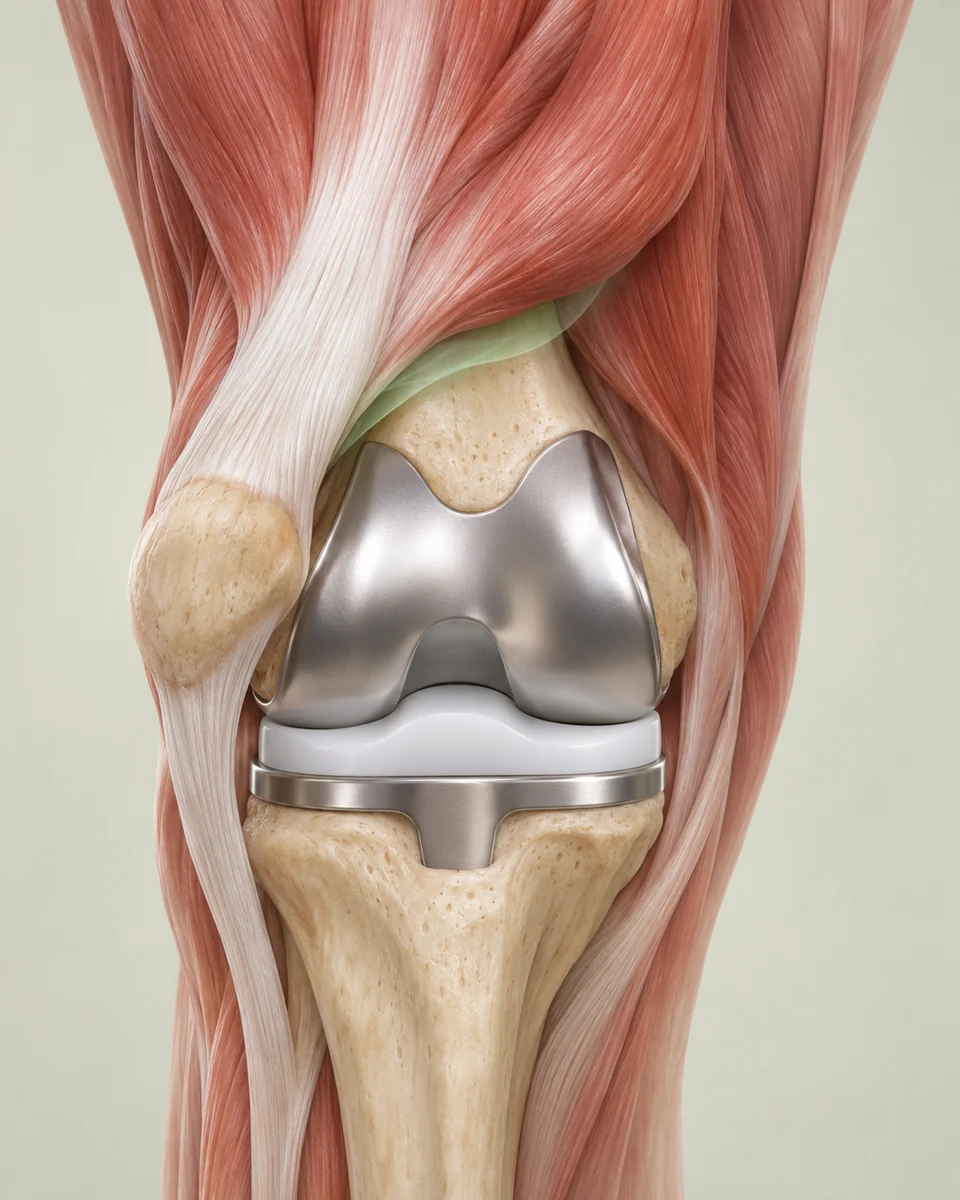




Quad-sparing total knee replacement.

A muscle-sparing approach using the subvastus technique. Dr. Martin will discuss whether this approach fits your knee and your goals.

Conceptual illustration of a knee replacement with the quadriceps tendon preserved

When replacement may help

Total knee replacement may be considered when arthritis or joint damage continues to cause substantial pain and limitation despite appropriate nonsurgical treatment. Your examination and imaging help establish whether it fits your condition.

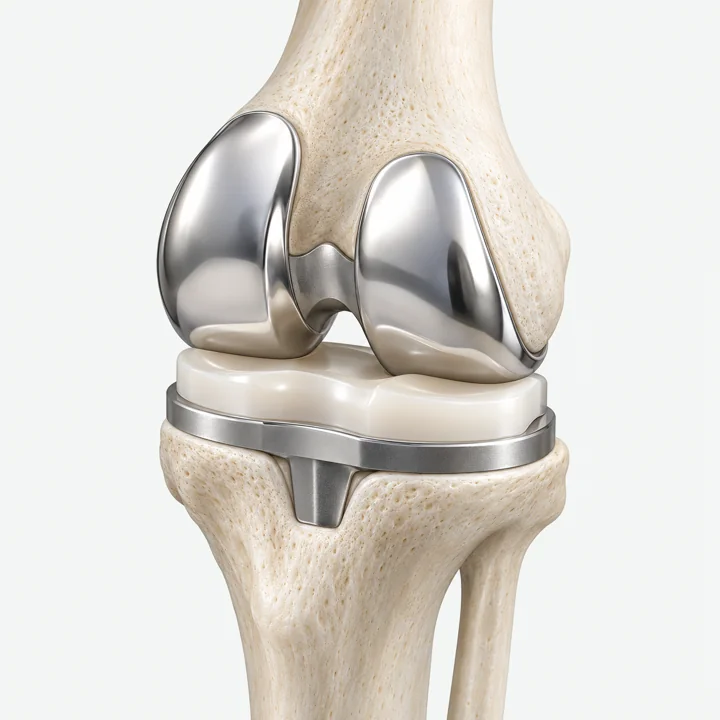
Illustrative knee replacement

Understanding your knee

Knee replacement addresses damaged joint surfaces. Your plan considers the pattern of arthritis, the condition of your knee, and the appropriate implant.

Have an existing replacement? Start with an evaluation →

What the procedure involves

Damaged joint surfaces are replaced with implant components. Planning considers your anatomy, alignment, and soft-tissue balance. Robotic assistance can support selected planning and surgical steps; Dr. Martin performs the operation.

An approach chosen for your knee

A quadriceps-preserving subvastus approach may be considered when appropriate. Dr. Martin will explain what that approach involves and whether it suits your anatomy and surgical needs.

Your recovery is part of the plan

Preparation includes home support, movement guidance, rehabilitation, and follow-up. Progress is gradual, and discomfort, swelling, and stiffness may persist during recovery. Your team will help you understand what to expect and when to seek advice.

Benefits and limitations

The goals include reducing arthritic pain and improving function. Risks include infection, blood clots, stiffness, persistent pain, instability, implant problems, and further surgery. A replacement knee may not feel or function exactly like your natural knee.

You should feel cared for
at every step.

Clear answers. Thoughtful preparation. People who help you understand what comes next.

A closer look at your options.

Approach, implant and technology

The subvastus approach describes how the knee is reached. The implant replaces damaged joint surfaces. Mako or CORI may support selected planning and surgical steps for suitable procedures and implant combinations. These are related but separate decisions.

Implant materials and allergies

Materials and fixation depend on the implant and your reconstruction. If you have a metal allergy, discuss the specific components and available alternatives. An implant material name should not be taken to imply that every robotic system uses that implant.

A closer look at your plan.

Imaging and diagnosis

A knee evaluation begins with your symptoms, examination, and appropriate imaging. X-rays commonly help assess joint damage; other tests or imaging may be requested for a specific diagnostic or planning question.

Planning and checking the reconstruction

The surgical plan considers implant position, bone preparation, alignment, and soft-tissue balance. With robotic assistance, the surgeon uses planning information and feedback during selected steps. The surgeon remains responsible for the procedure and the decisions throughout.

Learn more with video.

Cover images feature models. Patient stories describe individual knee replacement experiences.

Diagnosis

About the Procedure

Knee replacement video

Angelo — a patient’s experience

A muscle-sparing approach to your knee.

For appropriate patients, Dr. Martin uses a subvastus approach to reach the knee from beneath the inner portion of the quadriceps muscle. The technique preserves the quadriceps tendon and its attachment to the kneecap while allowing access to the joint.

The approach is selected for your anatomy and surgical needs. It is one part of a comprehensive plan that includes careful surgical technique, preparation, rehabilitation, and follow-up. Individual recovery varies.

Start with a conversation
about your hip or knee.

An evaluation. A second opinion. Help exploring your options.
Let’s understand the next step for you.