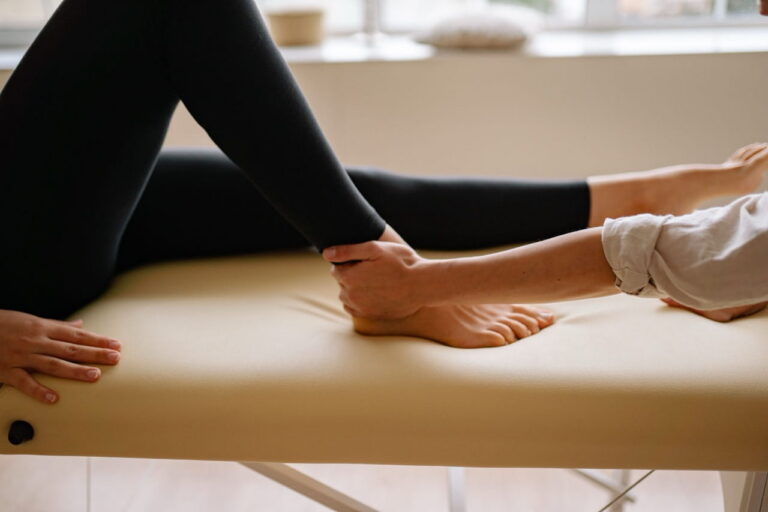
If you have a stiff joint or tight calf muscle after knee surgery, you are not alone. Many patients experience this, and they often describe it as though a band is wrapped around their knee or upper calf.
Walking can feel surprisingly different after a knee replacement. Even when the procedure has gone well, many patients notice that their steps do not feel completely even at first. An uneven gait after knee replacement surgery is particularly common during early recovery as the body adjusts to changes in the knee and rebuilds the strength and coordination needed for walking.
To many people’s surprise, clicking after knee replacement surgery is fairly common. Many patients describe a clicking, popping, tapping, or clunking inside the knee during certain activities, most notably walking, standing up from a chair, climbing stairs, or changing positions in bed.
Many people report weakness after knee replacement surgery, noting that their legs feel unusually tired or unsteady despite potential improvements in pain management and other aspects of their recovery.
The satisfaction rate for total knee replacements is 89.7%, meaning many patients experience a significant decrease in pain and other joint-related complications after healing from their procedure.