

Executive Summary
- Tightness after knee replacement is a common part of healing that can often be traced back to swelling, tissue repair, and changes in movement rather than a problem with the implant.
- Many patients are able to get rid of tightness after knee replacement through physical therapy, consistent movement, swelling management, and targeted strengthening exercises.
- Each recovery is unique, meaning the patient’s overall health, joint condition severity, activity level before the procedure, and commitment to rehabilitation can impact the prevalence and duration of calf tightness after knee surgery.
- Noticing gradual improvements over time is a good sign, but if you experience increasing pain, swelling, warmth, or loss of function, you should promptly schedule an evaluation with your surgical team.
Making Sense of Tightness After a Knee Replacement
If you have a stiff joint or tight calf muscle after knee surgery, you are not alone. Many patients experience this, and they often describe it as though a band is wrapped around their knee or upper calf.
Pressure, stiffness, and difficulty fully bending or straightening the joint can be frustrating and worrisome. Still, it doesn’t necessarily mean something is wrong with your implant or that you need to get knee revision surgery. In most cases, joint and calf tightness after knee surgery is an expected part of the healing process.
This sensation is usually due to the temporary inflammation surgery creates or the fact that soft tissues need time to repair and muscles surrounding the knee need time to relearn how to support normal movement. As swelling gradually decreases and strength returns, many patients notice the feeling of restriction begins to improve as well.
The guide below can help you get a better grasp of what is normal and what deserves extra attention from your care team. It even includes some tips for how to get rid of tightness after knee replacement surgery.
What Tightness Reveals About Your Recovery Progress
Although having a hard-to-bend knee or tight calf muscle after knee surgery can feel discouraging, it often provides valuable information about where you are in the healing process.
During the first several weeks after surgery, swelling naturally limits how easily a patient is able to bend and straighten their knee. The muscles around their joint may have also weakened due to being less active before surgery and during the early, more sedentary stages of recovery. As a result, many patients experience stiffness or resistance when walking, getting out of a chair, or climbing stairs after a knee replacement.
This obstacle takes time to go away, so patience and a more comprehensive view of recovery are key. It can be easy to get caught up in whether the implant itself has healed, but you must remember that successful recovery also depends on restoring mobility, rebuilding strength, and improving coordination—as these areas improve, the sensation of tightness often becomes less noticeable for patients.
No One Recovers the Same
Recovery timelines vary considerably from one person to another. For example, knee replacement recovery timelines for elderly patients may be longer than for someone middle-aged. In addition to age, other factors that may influence how quickly mobility returns include:
- Overall health
- Activity level before surgery
- The severity of arthritis
- Commitment to rehabilitation
Due to these factors, it is best to compare your progress to how you were at an earlier stage in your recovery, rather than contrasting it with other patient stories, though they may still be helpful for getting a baseline idea of what to expect.
The Common Factors Behind a Stiff or Tight Knee
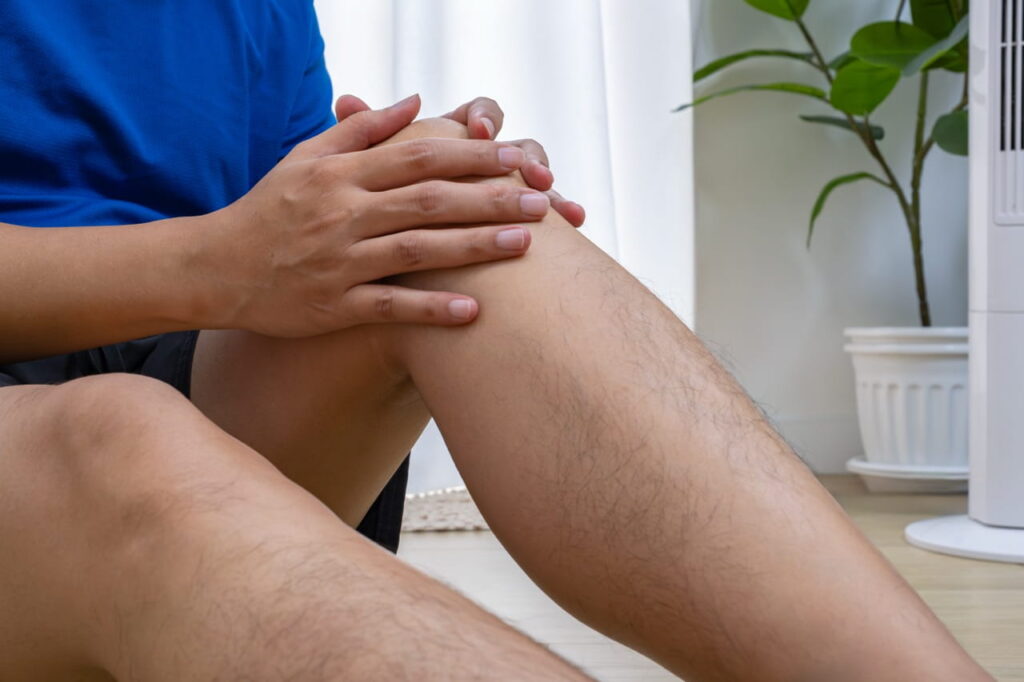
Some of the most noteworthy factors that can influence how tight the area feels throughout recovery are:
- Swelling – With blood plasma, lymph fluid, white blood cells, and extra water trapped inside cells and in the microscopic spaces between tissues, patients may feel pressure inside and around the joint that limits movement.
- Range of motion – Difficulty fully bending or straightening the knee can fuel a cycle that makes stiffness worse, as surrounding muscles, tendons, and joint fluid can tighten when the joint isn’t moved through its full range of motion.
- Muscle activation – Muscles surrounding the knee, like the quadriceps, are integral to the patient’s ability to straighten and bend their leg; when these muscles are weak, movement may feel restricted.
- Tissue healing – As the body builds fresh cells to fix surgical trauma to muscles, tendons, and soft tissues, the area is expected to regain flexibility gradually.
- Scar tissue remodeling – Knee replacement scar formation can temporarily contribute to a feeling of tightness because scar tissue is tight due to the buildup of extra collagen fibers, which shrinks during healing and loosens.
A tight knee or calf after replacement surgery rarely has a single cause. Instead, several normal healing processes often occur simultaneously, each contributing to the sensation of stiffness.
Is It a Tight Knee or a Tight Calf Muscle?
After knee replacement, it isn’t always easy to pinpoint where tightness is coming from. Some patients describe a feeling of pressure directly around the knee, while others notice a tight calf muscle after knee surgery that makes walking feel stiff or uncomfortable.
Tightness around the knee is often related to swelling, reduced range of motion, and healing tissues, as it was the area actively operated on. It may feel like an invisible band is wrapped around the joint, making it difficult to bend or straighten the knee fully.
On the other hand, a tight calf after knee surgery usually develops because the muscles are working differently than they were pre-surgery. It’s common to walk with a shorter stride or favor the non-surgical leg while recovering—many people even get used to using a walker or cane. These changes can place additional demand on the calf muscles in the long run, leading to calf tightness after knee surgery.
Figuring Out Where Your Stiffness Is Coming From
The table below highlights some of the key differences between joint tightness and calf tightness after knee surgery.
| What You May Notice | What It May Be Related To | What May Help |
| Tightness or pressure around the kneecap | • Swelling • Tissue healing • Limited knee motion | • Range-of-motion exercises • Swelling management • Physical therapy |
| Difficulty fully bending or straightening the knee | • Joint stiffness • Inflammation | • Consistent stretching • Guided rehabilitation |
| Tightness in the back of the lower leg | • Calf muscle fatigue • Altered walking mechanics | • Gentle calf stretching • Walking practice • Strengthening exercises |
| Both knee and calf tightness | • Normal changes in movement during recovery | • Following your rehabilitation plan • Gradually increasing activity |
Whether the tightness is coming from the knee, the calf, or both, it should gradually improve as your strength, mobility, and walking mechanics return. However, if calf tightness is accompanied by significant swelling, redness, warmth, or severe pain, contact your surgical team immediately, as these symptoms require prompt medical evaluation to rule out more serious conditions, such as a blood clot.
How to Get Rid of Tightness After Knee Replacement
Unfortunately, there’s no one-size-fits-all solution to a hard-to-bend knee or tight calf after knee surgery, but the best general advice is to stay consistent with your rehabilitation plan. Prioritize things like:
- Regularly moving around and doing prescribed joint mobility exercises
- Taking steps to reduce swelling after knee replacement surgery
- Gradually increasing activity with your medical provider’s permission
Healing is rarely linear, meaning some days, the knee may feel noticeably looser, but stiffness may still return the following day, especially if you increase your activity levels. You should look at subtle fluctuations like this as a normal part of recovery; they don’t necessarily indicate a setback.
Restoring Mobility Through Rehabilitation
Keeping up with physical therapy after your knee replacement plays a central role in restoring the patient’s normal range of motion and making it easier to perform everyday activities such as walking, climbing stairs, getting into a car, or standing from a chair. Rehabilitation focuses on improving movement quality while gradually rebuilding strength and flexibility.
The table below features some common knee replacement exercises you may try after surgery in your physical therapy program.
| Exercise | Primary Goal | How It Can Support Recovery |
| Heel slides | To improve knee flexion | By helping restore bending motion |
| Quadriceps sets | To activate thigh muscles | By supporting knee stability and straightening |
| Straight leg raises | To build strength | By improving control without excessive joint stress |
| Stationary cycling | To increase mobility | By encouraging smooth, repetitive knee movement |
| Sit-to-stands | To restore functional strength | By mimicking everyday movements like rising from a chair |
Do not perform any of the exercises above without guidance or permission from your healthcare provider, as progressing too quickly can hinder your recovery process.
When Tightness Means Something More
Although tightness is expected after knee replacement, certain symptoms deserve prompt medical attention. Some typical warning signs include:
- Increasing pain – May indicate inflammation or another complication.
- Significant swelling – Can signal excessive inflammation or other concerns.
- Warmth or redness – May indicate infection or another medical issue.
- Knee instability – May suggest problems with joint function or surrounding tissues.
- Loss of motion – May require additional treatment or rehabilitation adjustments.
If something feels noticeably different from your normal recovery, don’t wait for your next scheduled appointment. Contact a qualified joint specialist like Dr. Shane Martin so your concerns can be evaluated before they become more significant.
A Personalized Approach to Knee Replacement Recovery
One of the main things you should take away from this guide is that every knee replacement recovery is unique. While some patients get rid of tightness shortly after knee replacement, others need additional time for swelling to resolve, strength to return, and walking mechanics to normalize. The goal isn’t simply eliminating knee or calf tightness after knee surgery; it’s restoring the comfort, confidence, and function needed to return to everyday life.
At the Joint Replacement Center of Scottsdale, recovery plans are tailored to each patient’s procedure, health, and goals. Through personalized guidance, ongoing monitoring, and evidence-based rehabilitation, our compassionate care team helps patients progress safely through every stage of recovery so they have the best chance of adopting comfortable, confident movement.
If you’re experiencing persistent tightness, stiffness, or have questions about joint replacement in general, contact our team to schedule a consultation.