

Key Takeaways
- Persistent pain, stiffness, and impaired mobility are some signs you need a knee replacement, though they often develop gradually.
- Medical providers typically only suggest knee replacement surgery when their patient’s quality of life is declining, and conservative treatments no longer provide lasting relief.
- Imaging studies like X-rays help evaluate joint damage, but healthcare providers should also consider your symptoms, activity level, and overall health to confirm surgery is right for you.
- The average age for a knee replacement is between 60 and 70 years old, but the best time for this procedure depends on the patient’s individual goals and recovery potential, not simply their age.
Assessing How Knee Pain Has Affected Your Everyday Life
Typically, knee complications like pain and limited mobility start small and worsen over time. Since joint degeneration is usually gradual, it can be hard to realize how much your daily life has changed over the course of several months or years.
So, how do you know if you need a knee replacement? To get more clarity on this, you have to look beyond occasional aches and pains—think about how your mobility and pain levels have changed long-term.
Scheduling your day around opportunities to sit down or declining knee-reliant activities you once enjoyed are common signs you need a knee replacement. Nevertheless, there is a lot that goes into this decision, and it is ultimately up to you and your medical provider. Still, the guide below can give you a rough idea of how to know if you need a knee replacement.
Signs It May Be Time to Consider Knee Replacement
Symptoms that have become more frequent, more severe, and increasingly disruptive despite your best efforts to manage them may be indicators that you need a knee replacement.
Some examples of symptoms that should encourage you to discuss surgical options with an orthopedic specialist are:
- Persistent knee pain – If pain continues during walking, standing, sitting, or even resting, your joint may be significantly deteriorated.
- Ongoing stiffness – Difficulty bending or straightening the knee, especially after sitting or first thing in the morning, should be brought up to your doctor.
- Reduced mobility – If you are walking shorter distances, avoiding stairs, or limiting physical activities, your knee complications may be hindering your everyday life.
- Knee instability – Feeling like your knee may give way may lead to a lack of confidence during movement.
- Swelling that returns frequently – If inflammation continues despite rest, medication, or other treatments, it is time to see a doctor.
- Difficulty with everyday tasks – Knee pain while walking up stairs, standing from a chair, shopping, exercising, or household chores are red flags.
Since no single symptom automatically renders surgery necessary, healthcare providers are expected to evaluate the overall pattern of your symptoms, how long they’ve persisted, and the degree to which they’re affecting your quality of life.

Exploring Non-Surgical Options
Knee replacement is rarely the first treatment a patient is advised to try. In fact, most orthopedic surgeons recommend beginning with conservative treatments whenever appropriate. Depending on the cause and severity of knee pain, alternative therapies may successfully reduce symptoms for months or even years by reducing inflammation, improving joint stability, strengthening surrounding muscles, or minimizing stress placed on the knee.
Common non-surgical approaches include:
- Physical therapy and low-impact exercises
- Anti-inflammatory medications
- Corticosteroid or hyaluronic acid injections
- Knee bracing and activity modification
- Weight management
- PEMF therapy
For patients with mild to moderate joint complications, these approaches can provide meaningful relief and improve day-to-day function.
Why Conservative Care Sometimes Stops Working
Unfortunately, many joint conditions like knee arthritis are progressive. As cartilage continues wearing away and joint damage becomes more advanced, the conservative treatments mentioned above may become less effective.
The table below goes more in-depth on some of these non-surgical treatments, explaining how they may help and when their results may start to fall short.
| Conservative Treatment | How It May Help | When It May Become Less Effective |
| Physical therapy | Physical therapy can enhance long-term joint health by improving strength, flexibility, and joint stability | Advanced joint damage limits functional improvement |
| Medications | Prescription and over-the-counter medication can reduce pain and inflammation | Symptoms usually return once medication wears off |
| Knee injections | Injections may delay the need for joint replacement surgery by providing temporary pain relief | The number of injections a patient can get is restricted for safety, and windows of relief may become shorter over time |
| Knee braces | Knee braces are designed to improve support and stability | Assistive devices cannot correct significant cartilage loss |
| Activity modification | Adapting your physical activity can reduce stress on the joint | Daily activities may continue becoming more limited |
Keep in mind, choosing knee replacement doesn’t mean these treatments failed; it usually just reflects the natural progression of joint disease. When conservative care no longer provides enough relief to maintain the lifestyle you want, surgery may become the next logical step.
Starting with Imaging
Imaging studies are one of the first tools your orthopedic surgeon will use to look for signs you need a knee replacement.
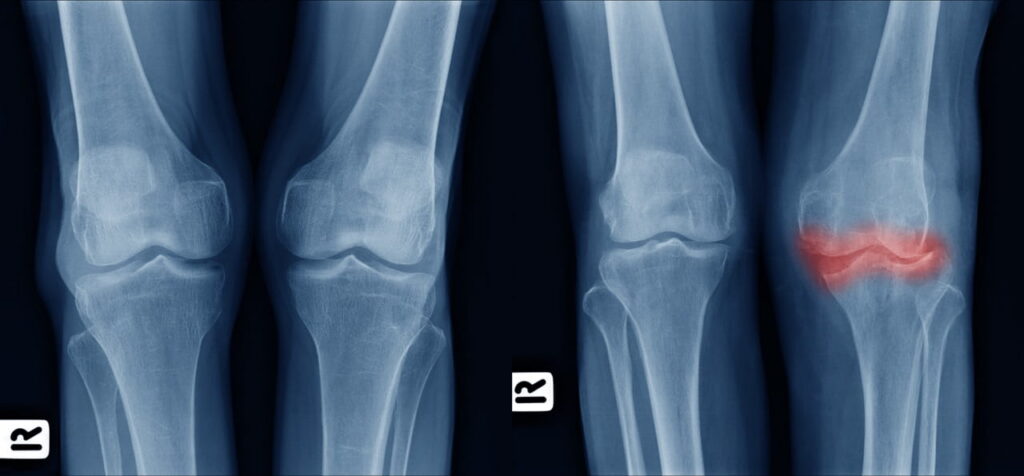
Standard X-rays are typically the starting point because they clearly show the amount of joint space remaining, changes in bone alignment, bone spurs, and other signs of arthritis. Since healthy cartilage doesn’t appear on an X-ray, narrowing of the joint space often indicates that cartilage has worn away.
In some situations, magnetic resonance imaging (MRI) may also be recommended. Unlike X-rays, MRIs provide detailed images of soft tissues such as:
- Cartilage
- Ligaments
- Tendons
- The meniscus
While MRIs aren’t necessary for every patient considering knee replacement, they may help evaluate other conditions or provide additional information when the diagnosis isn’t entirely clear.
The Difference Between X-Rays and MRIs
The table below can help you distinguish how these two types of imaging studies differ, in case your medical provider suggests either of them.
| Imaging Study | What It Can Show | How It Helps Guide Treatment |
| X-ray | • Joint space narrowing • Arthritis • Bone spurs • Alignment | Often confirms the severity of osteoarthritis and helps determine whether joint replacement should be considered |
| MRI | • Cartilage • Ligaments • Tendon • Meniscus | Helps evaluate additional injuries or conditions when needed |
Both forms of imaging can provide valuable information, but they are just one piece of the overall evaluation. Some patients have severe arthritis visible on an X-ray but experience relatively few symptoms, while others have moderate imaging findings and significant pain that limits daily life. For this reason, surgeons never rely on imaging alone when determining whether knee replacement is the right treatment.
Looking Beyond the X-Ray
An experienced orthopedic surgeon combines X-ray findings with a physical examination, medical history, and a detailed discussion about how their patient’s symptoms affect their everyday life.
Some things your surgeon may assess during your evaluation are:
- Your pain levels and when symptoms occur
- Your knee’s range of motion
- Walking mechanics and overall mobility
- How stable and aligned your knee is
- Your activity level and personal goals
- Your overall health and medical history, including previous treatments
This comprehensive approach explains why two patients with similar X-rays may receive very different treatment recommendations.
Age Is Only Part of the Picture
The average age for a knee replacement is between 60 and 70 years old. When some people learn this information, they automatically think they should wait until they’re “old enough” before considering knee replacement, worrying that they’re too young to benefit from surgery. In reality, age is only one factor that orthopedic surgeons consider when recommending treatment.
For some patients, severe arthritis develops earlier because of things like:
- Previous injuries
- Genetics
- Years of repetitive stress on the joint
On the other hand, some people remain active with mild arthritis well into their 70s or 80s without needing surgery. Every patient’s situation is different.
What Is More Important Than Age?
Some things that today’s joint specialists focus on more than age when giving knee replacement suggestions are:
- The patient’s symptoms
- The level of their joint damage
- Their activity goals
- Their overall health
Delaying knee surgery solely because of age isn’t always the best approach. Living with chronic pain can lead to reduced activity, muscle weakness, weight gain, and a decline in overall health, all of which may make recovery more challenging later on. So, instead of asking whether you’re “too young” or “too old” for surgery, focus on whether your knee pain is preventing you from living the life you want.
Top 7 Questions Worth Asking Before You Decide
Choosing knee replacement is a significant, life-changing decision that you and your prospective surgeon should fully explore. Therefore, patients should feel comfortable asking questions before moving forward. Understanding what to expect from your first orthopedic consultation onward can help you make an informed decision and feel more confident throughout the treatment process.
Seven helpful questions to discuss with your orthopedic surgeon include:
- Is knee replacement the best treatment for my condition?
- Are there additional non-surgical options worth trying?
- Would I benefit more from a partial or total knee replacement?
- What type of implant or surgical technique do you recommend?
- What can I expect during physical therapy and rehabilitation?
- How long before I can return to work, travel, or recreational activities?
- What results can I realistically expect based on my health and lifestyle?
These questions can spark conversations that help ensure that you are informed about your options and that the treatment plan you go with aligns with your goals rather than focusing solely on imaging findings or arthritis severity.
Making an Informed Treatment Decision
If you’re wondering how to know if you need a knee replacement, the answer goes beyond a single symptom or X-ray. Instead, it comes down to how knee pain affects your mobility, independence, and quality of life.
Modern knee replacement surgery is more personalized than ever before, especially at top-of-the-line medical facilities like the Joint Replacement Center of Scottsdale. We offer advanced imaging, precise surgical planning, and minimally invasive knee replacement techniques that make it easier to tailor treatment to each patient’s anatomy, lifestyle, and recovery goals.
If persistent knee pain is limiting your daily life or you’re noticing the signs you need a knee replacement, schedule a consultation with us to determine whether knee replacement is the right next step for you.