

Executive Summary
- Modern knee replacements are designed to provide long-term pain relief and improved function, but sometimes knee replacements do wear out, loosen, or get infected years after surgery.
- Some commonly reported symptoms of a knee replacement wearing out are new or worsening pain, declining mobility, increasing stiffness, or changes in knee stability; however, these can also be caused by other health issues.
- To determine whether the implant or surrounding structures have changed, an orthopedic evaluation may include a review of your symptoms and surgical history, a physical examination, and imaging.
- Revision knee replacement surgery is not always necessary when symptoms develop. Treatment depends on the underlying cause, the condition of the implant and surrounding bone, and the patient’s individual circumstances.
A Knee Replacement Can Change Long After Recovery
Advances in implant materials, surgical techniques, and implant design have helped make knee replacement a successful treatment for people with advanced arthritis and other forms of joint damage. This type of surgery gives most patients many years of reliable function; nevertheless, sometimes knee replacements do wear out.
An artificial knee is still a mechanical joint that is exposed to forces every time you walk, exercise, and perform other everyday activities, like climbing stairs after your knee replacement. Over many years, the implant components and the tissues surrounding them can change. So, if your knee begins behaving differently after a period of successful function, you should have it professionally evaluated to determine what has changed.
The guide below can help you keep a lookout for symptoms of your knee replacement wearing out, such as new pain or stiffness, swelling, or instability. Still, these symptoms can stem from many issues, making it essential to confirm their causes with a qualified medical provider who can assess your condition in person.
The Wearing Process
The polyethylene insert between the metal components of a modern-day implant can gradually experience mechanical wear. In some cases, wear particles can contribute to an inflammatory response that affects the surrounding bone. Over time, this process can contribute to bone loss or changes in the fixation of the implant.
When Do Knee Replacements Start to Wear Out?
Oftentimes, total knee replacements start to show signs of wear or loosening around 15 to 20 years after surgery, but that timeline can vary from person to person.
Some factors that impact how long implants last are:
- Activity level
- Implant materials and design
- Surgical technique
- Bone quality
- The condition of the surrounding tissues
Since each situation is different, it is best to check in with your healthcare provider regularly.
Other Causes of Post-Surgery Knee Complications
In addition to polyethylene wear, some other potential causes of a painful or malfunctioning knee replacement include:
- Alignment problems or implant loosening
- Infection
- Instability
- Bone loss or a fracture around the implant
- Problems involving surrounding muscles, tendons, or other soft tissues
These conditions can produce overlapping symptoms, which is why it is difficult to determine the cause based on symptoms alone. Nevertheless, if you notice any of the red flags below, an experienced joint specialist like Dr. Shane Martin can help you get to the bottom of the issue.
Signs Your Knee Replacement Is Wearing Out
Even though the symptoms below do not automatically mean someone needs to get revision surgery, they should be brought to the care team’s attention in a timely manner.
Pain That Returns After a Smooth Recovery
One of the more important symptoms of knee replacement wearing out is new or progressively worsening pain after an extended period of relatively good function.
Details about the pain can provide useful information that points toward the root of the problem. Some people notice discomfort primarily when walking or exercising, others report pain when standing up or climbing stairs, and some have discomfort that occurs while resting.
To pin things down, your medical provider may want to know about characteristics like:
- Where the pain occurs
- When the pain occurs
- Whether it is associated with activity
- Whether it is becoming more frequent or severe
- Whether it improves with rest
- Whether it is accompanied by swelling, stiffness, or instability
Pain alone cannot establish that a knee replacement is failing, as problems involving muscles, tendons, nerves, the spine, or other structures around the knee can also cause symptoms. For this reason, returning pain should be viewed as a reason to investigate rather than proof that the implant has worn out.
Losing Motion or Function You Once Had
Pain is not necessarily the first indication that something has changed. Some patients notice that their knee gradually becomes less functional after years of doing well.
Some people begin experiencing increases in stiffness and swelling that can lead to a reduction in their range of motion. This can make activities that once felt comfortable after surgery difficult again, such as:
- Walking moderate distances
- Climbing stairs
- Getting out of a chair
- Doing exercises that are usually okay after a knee replacement
Keep in mind, late-stage complications are different from the stiffness and swelling that commonly occur during the early part of the recovery period. During the first weeks and months after surgery, the knee is still healing—it takes time to reduce swelling after surgery and rebuild strength and mobility. A new decline after years of stable function presents a different situation and warrants evaluation.

A Change in Stability Can Signal a Problem
After a patient makes it through the post-surgery muscle weakness that happens after knee replacement surgery, their new prosthesis should provide a stable platform for walking and everyday movement. If the knee begins buckling, giving way, or feeling as though it is shifting, the patient should reduce their activity levels and seek a medical evaluation.
Some things that can affect how a replaced knee functions are:
- Changes in the implant from wear or loosening
- Alignment
- Ligament balance
- Surrounding soft tissues
Patients may describe instability in different ways. You might feel that your knee is going to give out when walking, notice difficulty navigating stairs, or feel less confident putting your full weight on the leg.
A new feeling of instability does not necessarily mean the implant has failed. However, repeatedly adapting your activities around an unstable knee without determining the cause could allow an underlying problem to go unaddressed.
Symptoms Start the Investigation, Not the Diagnosis
If you develop symptoms after knee replacement, your orthopedic specialist will typically look at the entire clinical picture rather than relying on a single symptom.
What Medical Teams Take into Consideration
The evaluation may begin with a discussion of your medical and surgical history. Your surgeon may want to know when your symptoms started, whether they have changed over time, what activities aggravate them, and how your current function compares with your previous level.
A physical examination can then provide additional information about things like:
- The patient’s range of motion
- Their stability
- How strong their leg muscles are
- Their swelling severity
- The condition of the tissues surrounding the knee
Imaging Can Help Reveal Changes
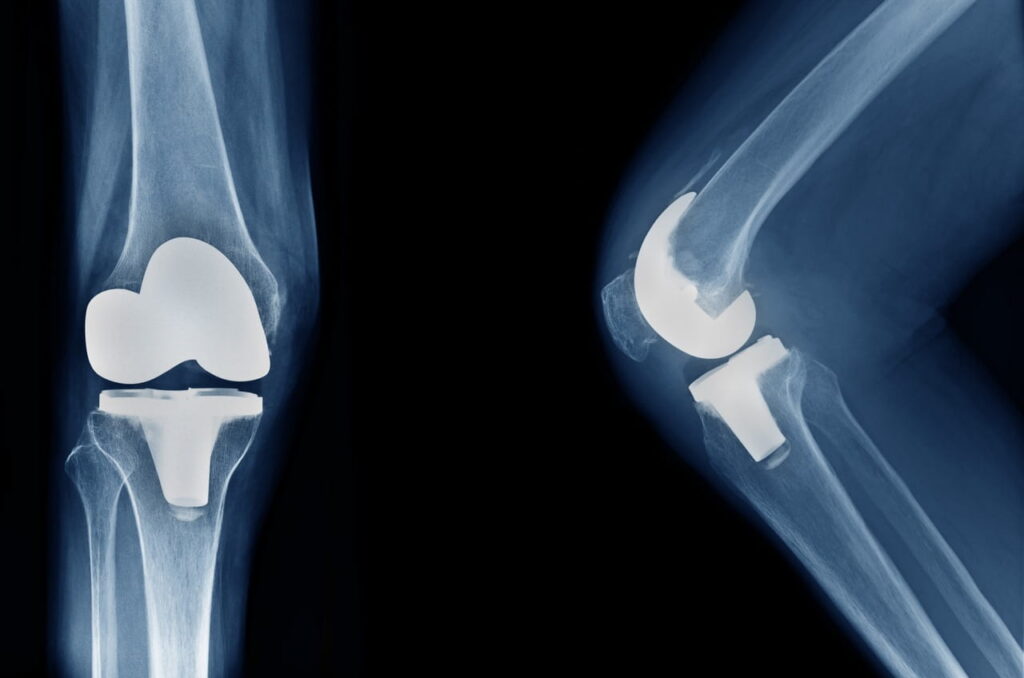
Imaging is another important part of evaluating a knee replacement. X-rays can help surgeons assess the position of the implant and look for changes involving the surrounding bone. Depending on the symptoms and suspected cause, additional diagnostic testing may be appropriate.
Comparing current images with earlier postoperative imaging can be particularly useful. Rather than examining the knee at only one point in time, your surgeon can look for changes in things like:
- Implant position
- Bone condition
- Alignment
- Other structures
This is why an evaluation of a potentially worn knee replacement involves more than asking how old the implant is. The combination of symptoms, examination findings, imaging, and surgical history provides a more complete picture of what is happening.
Revision May Be Used to Fix the Underlying Problem
Total knee replacement revision is a procedure performed to address problems affecting an existing knee replacement. Depending on the situation, revision surgery may involve replacing one or more components of the implant or addressing changes in the surrounding bone and soft tissues.
However, experiencing pain or other symptoms does not automatically mean revision surgery is necessary. The first step is determining what is causing the problem.
When revision is being considered, the surgeon may evaluate:
- The condition and positioning of the existing components
- The amount and location of any bone loss
- The stability of the knee
- The condition of surrounding soft tissues
- The severity and progression of symptoms
- The patient’s overall health
- Activity level and functional goals
- Previous knee surgeries
The appropriate treatment depends on these individual factors. In some cases, the underlying issue can be managed without replacing the entire implant, while others need a second knee replacement procedure.
Because revision procedures can be more complex than an initial knee replacement, identifying the underlying cause and developing an appropriate treatment plan are particularly important.
When Should You Have a Knee Replacement Evaluated?
Not every ache or temporary increase in stiffness means something is wrong with your knee replacement—occasional discomfort can occur for many reasons, including changes in activity or problems affecting structures outside the artificial joint.
However, it is reasonable to contact your orthopedic team when you notice a persistent or progressive change from your normal baseline, particularly if it involves pain, mobility, or stability.
Some examples of scenarios that are worth having evaluated are:
- New or progressively worsening knee pain
- Increasing stiffness or loss of motion
- Persistent swelling
- Difficulty walking or performing familiar activities
- New buckling or instability
Prompt evaluation can help distinguish between expected changes, problems that may respond to nonsurgical treatment, and issues involving the implant that require additional intervention.
Getting the Right Evaluation for Your Knee Replacement
At the Joint Replacement Center of Scottsdale, patients can receive individualized evaluation and guidance for problems involving previous joint replacements. The goal is to understand the underlying cause of your symptoms and develop a treatment approach based on the condition of your knee, your health, and your functional goals.
If you have noticed potential symptoms of your knee replacement wearing out, contact the Joint Replacement Center of Scottsdale to schedule an evaluation and discuss your options.