

Key Takeaways
- Many Canadians can continue working with their U.S. orthopedic surgeon after returning home through virtual follow-up appointments and remote recovery monitoring.
- Post-operative appointments often focus on healing progress, mobility, pain management, and rehabilitation, making many follow-ups well suited for telemedicine.
- Preparing updates, photos, videos, and questions before each virtual appointment can help patients get the most from their follow-up care.
- Staying connected with both the surgical team and local healthcare providers helps create a coordinated recovery experience while minimizing additional travel.
Why Follow-Up Care Doesn’t End When You Return Home
For many Canadians considering medical tourism in Scottsdale or another part of the United States, one of the biggest concerns is what happens after they return home. While traveling abroad for treatment can provide access to specialized care and shorter wait times, some patients worry that returning home means leaving their surgical team behind—fortunately, that is often not the case.
Advances in virtual healthcare have made it much easier for U.S. surgeons to continue monitoring Canadian patients after they go back across the border. Of course, some situations still require in-person care, but many aspects of post-operative recovery can be handled through video appointments, phone consultations, secure messaging, or coordinating with local healthcare providers.
These various avenues for remote follow-up care allow patients to remain connected to the U.S. medical team who performed their surgery from the comfort of their home. So, no need to make repeated trips back to the United States; you can continue receiving expert guidance throughout your recovery with the help of virtual appointments and coordinated local care, as outlined by the guide below.
What to Expect From Follow-Up Appointments
The knee and hip replacement recovery timeline unfolds over the course of several months. During that period, patients will likely have to attend follow-up appointments that focus on things like:
- Evaluating healing
- Discussing rehabilitation progress
- Answering patient questions
- Adjusting recovery recommendations
As you have conversations regarding the topics above, you’ll likely realize that the post-surgery experience relies more on symptom updates, mobility assessments, and patient feedback than on hands-on treatment.
The Typical Follow-Up Timeline After Joint Replacement
While every recovery plan is individualized, most patients can expect several follow-up visits throughout the first year after surgery to help evaluate both short-term healing and long-term function.
Many patient stories show people who have received a joint replacement going through follow-up appointments with varying focuses that line up with their healing process. The table below breaks down how some post-surgery appointments may shift throughout recovery.
| Recovery Stage | Typical Timing | Primary Focuses of Follow-Up Appointments at This Time |
| Early recovery | First few days to first couple of weeks | • Checking in on incision healing progress • Going over pain management updates • Evaluating swelling status • Determining how well basic mobility has been restored |
| First several weeks | Weeks 2–6 | • Giving an update on walking progress • Assessing range of motion • Going over rehabilitation milestones |
| Ongoing recovery | Weeks to several months | • Judging how well strength is being rebuilt • Assessing daily function improvements • Deciding whether or not you should progress activity levels |
| Long-term follow-up | Several months to one year and beyond | • Monitoring implant performance Promoting long-term joint function |
The Biggest Surprise About Follow-Up Appointments
Many patients are surprised to learn that these appointments often involve discussion rather than procedures. The surgeon may do things like:
- Review how recovery is progressing
- Evaluate symptoms
- Discuss rehabilitation goals
- Determine whether the patient is ready to advance their activity level
Because much of this information can be shared through conversation, observation, and patient updates, many routine follow-up visits can be completed remotely when appropriate. Still, the exact schedule and demands can vary depending on the procedure, the patient’s overall health, and individual recovery progress. Therefore, Canadians should talk to their care team about how long to stay in the U.S. after surgery just to ensure they do not miss any follow-up appointments that require their presence in person.
What Can Be Handled Through Virtual Appointments?
Many routine follow-up discussions after joint replacement focus on evaluating progress, addressing patient concerns, and adjusting recovery recommendations based on how healing is progressing—these conversations can often be completed effectively through secure video appointments.
During a virtual consult, surgeons may review several aspects of recovery listed in the table below.
| Recovery Area | What Surgeons Typically Evaluate | How It May Be Covered During a Virtual Visit |
| Pain levels | • Overall comfort • Symptom changes | Discussion of pain severity, location, frequency, and whether symptoms are improving. |
| Walking ability | • GaitBalance • Mobility | Observation of walking or standing through a live video demonstration. |
| Swelling | • Changes since the previous appointment • Accompanying symptoms | Review of visible swelling using the camera or photos shared before the appointment. |
| Range of motion | • Flexibility • Functional movement during daily activities | Guided movement exercises to assess bending, straightening, and overall mobility. |
| Rehabilitation progress | • Physical therapy goals • Exercise progression | Discussion of therapy milestones, home exercises, and functional improvements. |
| Medication questions | • Pain management • Medication adjustments | Conversation about medication effectiveness, side effects, and any recommended changes can help you navigate prescriptions after surgery in the U.S. |
Why Video Appointments May Be Better Than Audio-Only
Video appointments allow surgeons to observe how patients move. Depending on the situation, patients may be asked to do tasks like:
- Walk a short distance
- Bend the knee
- Stand from a chair
Depending on the condition that was treated, you may be asked to demonstrate other functional movements to assess recovery. There are plenty of knee and hip stretches and exercises you can do at home that can help you illustrate your joint health through video chat.
Why Follow-Up is Important
Virtual appointments are an opportunity to discuss concerns that naturally arise throughout rehabilitation. Patients commonly ask questions about incorporating work into recovery, or whether they can travel, drive, exercise, or climb stairs after a knee replacement or hip arthroplasty.
When additional testing becomes necessary, surgeons can often coordinate with imaging centers or healthcare providers closer to the patient’s home.
Ways to Get the Most Out of Virtual Follow-Ups
Virtual appointments are usually most productive when patients prepare in advance. Follow the three steps below to maximize the value of virtual follow-ups.
1. Start a Journal Dedicated to Recovery
Recovery happens gradually, making it easy to forget important details between appointments. So, you should track your recovery progress while abroad by keeping a simple record of symptoms, milestones, and questions—doing so can help you provide more accurate updates and help the surgical team identify meaningful changes over time.
Helpful information to keep track of in your journal includes:
- Pain levels – Shows recovery trends
- Walking progress – Evaluates mobility improvements
- Range of motion updates – Measures functional recovery
- Swelling changes – Helps monitor healing
- Physical therapy progress – Guides rehabilitation recommendations
- Questions or concerns – Ensures important topics are discussed
2. Include Visual Support
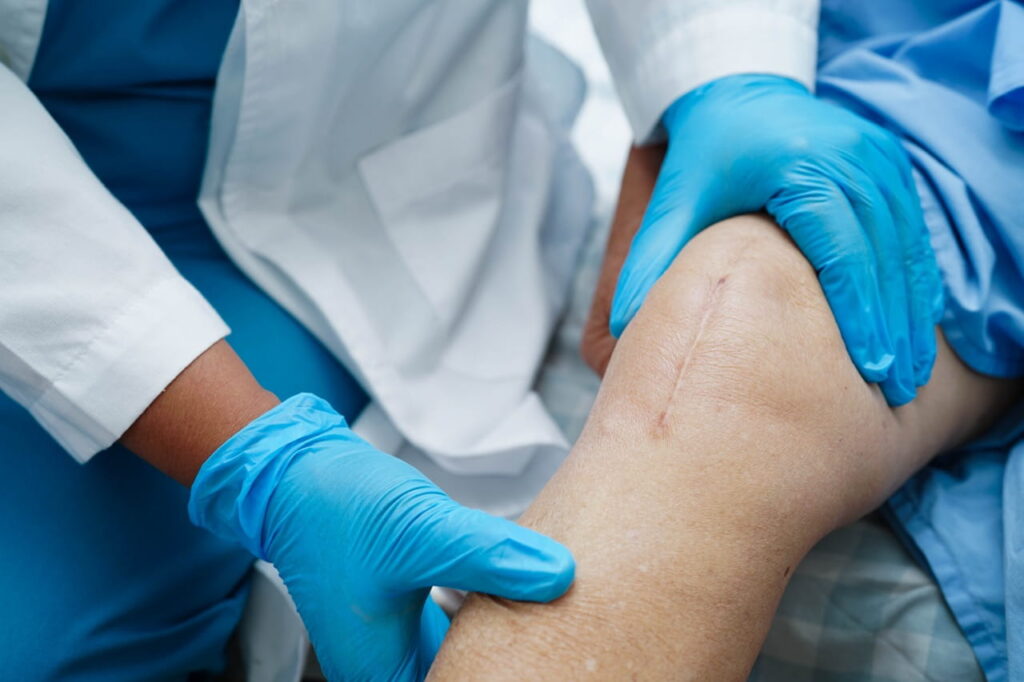
Photos and short videos can also provide valuable information. For example, patients may be asked to share images of their knee replacement scar or whatever incision they have. They may also be instructed to demonstrate how they walk or record specific movements that help illustrate concerns discussed during the appointment.
3. Leverage Local Healthcare Teams
Canadian healthcare providers also play an important role during recovery, even if communicating with the U.S. team is your primary focus. Just be ready to reach out to your family physician, physiotherapist, or diagnostic imaging facility if additional evaluation or treatment is needed—most Canadian medical providers will be willing to work alongside your U.S. surgical team.
This collaborative approach allows patients to recover close to home while still benefiting from the expertise of the surgeon who performed the procedure.

Knowing When to Contact Your Surgical Team
While routine follow-up appointments provide regular opportunities to discuss recovery, patients should not feel that they need to wait for a scheduled visit if something changes unexpectedly.
Recovery after joint replacement is generally gradual and predictable, but new or worsening symptoms deserve attention. Early communication allows the surgical team to determine whether symptoms are a normal part of healing or whether additional evaluation is appropriate.
Potential Warning Signs
Patients should contact their surgical team if they experience concerns such as:
- Increasing pain – May indicate a change in recovery
- New or worsening swelling – Could require further evaluation
- Signs of infection – Prompt assessment is important
- Problems with incision healing – Complications with the development of knee or hip replacement scars may need medical attention
- Difficulty progressing with activity – Rehabilitation recommendations may need adjustment
- Sudden mobility changes – May warrant additional investigation
The Benefits of Staying Connected After Surgery
Returning to Canada does not mean the recovery journey is over or that communication with your surgeon needs to end. Modern telemedicine has made it possible for many patients to continue receiving expert guidance throughout rehabilitation without making repeated trips back to the United States.
Remote follow-up appointments offer several important advantages. Patients can continue working with the surgeon who performed their procedure, receive individualized recommendations based on their recovery progress, and address questions as they arise without the time, expense, and physical demands of additional travel.
The Joint Replacement Center of Scottsdale understands that every patient’s recovery is unique, so we maintain open communication from consultation to surgery and beyond. With our team’s knowledge and assistance at your disposal during the healing process, you can rest easy knowing that your concerns will be addressed promptly to avoid delays. Whether discussing rehabilitation goals, reviewing mobility improvements, or evaluating new symptoms, ongoing follow-up with our team plays an important role in achieving the best possible outcome.
If you are considering orthopedic surgery in the United States, contact the Joint Replacement Center of Scottsdale today to learn more about remote follow-up appointments and personalized care for Canadian patients.